

Social Anxiety: How to Get Over Fear of Rejection
Do you ever feel like you’re all tied up in knots because you’re anxious about being rejected or disliked for who you are? If you struggle with social anxiety, it’s probably no surprise that fear of rejection is one of the biggest things people worry about. In this video Will Bratt touches on why that is, and what you can do to feel more at ease when anxiety comes a-knockin’.

Do you ever feel like you're all tied up in knots because you're anxious about being rejected or disliked for who you are? If you struggle with social anxiety, it's probably no surprise that fear of rejection is one of the biggest things people worry about.
Transcript
Do you ever feel like you’re all tied up in knots because you’re anxious about being rejected or disliked for who you are? If you struggle with social anxiety, it’s probably no surprise that fear of rejection is one of the biggest things people worry about. In this video I’ll be touching on why that is and what you can do to feel more at ease when anxiety comes a-knockin’. Keep watching to learn all about it!
Hi folks, I’m Will Bratt from Heart & Oak Therapy, supporting better, brighter lives. We’re therapists who do regular videos on mental wellness, and give practical ideas and tips to address your problems and make your life happier – so hit the subscribe button to keep in the loop!
As you may know from your own lived experience, social anxiety is often a strong emotional response to anticipating rejection, exclusion, judgment, or just not fitting in with others. Now, not everyone who shares these fears experiences them for all the same reasons, but it really is uncanny that so many of us can relate to these feelings in some way!
No matter the reason behind why you feel anxious about being disliked or rejected, you probably don’t appreciate the way these fears can shrink your life. Social anxiety can make it really hard to venture out into new social contexts, get to know new people, and let new people get to know you. So let’s take a closer look at social anxiety, fear of rejection, and what you can do about it!
Isn’t it interesting how human beings can find it so unnerving to imagine being disliked or rejected? I mean, it’s not like our lives are necessarily at stake. But still we really struggle to feel comfortable with that possibility. I touch on this in our video “How Most Anxiety is Social Anxiety”, and I explain how this is because belonging goes hand in hand with dignity. I definitely recommend giving that a watch after you’re finished with this one.
But yeah, even though we don’t have to depend on each other in the modern world the way our ancestors did, belonging is still vital for our sense of wellbeing. So it makes sense why so many of us have a hard time with this particular kind of social anxiety.
Now, even though it makes a lot of sense to feel anxious about rejection, exclusion, and not fitting in, it can end up being very restrictive for us to take those fears as gospel without challenging them. In other words, just because something is scary, doesn’t mean we should rule it out and avoid it forever. Although the prospect of things going badly can be terribly unnerving, it can also be rewarding and enlivening to challenge our social fears with courage.
So here are some ways of taking the wind out of social anxiety’s sails:
1. Ask yourself “So what?”
The first way to disrupt social anxiety around the fear of rejection is to ask yourself in a very kind and honest way, “So what?” What if you did experience rejection, judgment, or some other negative social response. What would that mean for you? What would the consequence be for your life? What’s the best way you imagine yourself or someone else dealing with that kind of experience?
I offer questions like these to help you explore for yourself what it is about the possibility of rejection or not fitting in that feels as scary as it does. While there’s a reason for everything, not everything needs to stay the way it is. In this case, I have a hunch that even though it might feel really scary to be rejected or excluded, your fears probably don’t give you enough credit for your ability to deal with challenges like these.
2. Consider the Cost/Benefit
That leads us to the second way of keeping social anxiety and fear of rejection from constraining your life: considering the cost and benefit of putting yourself out there in spite of your fears, versus adhering to social anxiety’s cautions.
What do you imagine would help or hurt your life more? Having your fears come true and experiencing rejection, or staying quiet or withdrawn to keep the rejection from happening? I think it’s important to acknowledge here that every situation is different, and so there’s no universally right answer to this question. I also can’t tell you what’s right or wrong for you, but I can say that for myself, strictly adhering to my fears of judgment, rejection, and exclusion usually costs me more than it benefits me. I’ve developed some wonderful relationships with people who I initially felt scared or intimidated to talk to, in part because I took the risk of approaching them.
3. Building confidence
This connects naturally to the third way of reducing your fear of rejection: building confidence in the possibility of things going well.
In our video “Is Social Anxiety Really About Low Self-Esteem?”, I acknowledge the reality that a lot of people develop fears and expectations around receiving negative responses from others because they’ve actually had a number of those experiences in the past. In cases like this, social anxiety can actually be seen as resistance to receiving rejection or mistreatment in the future. But I also see the dilemma around not wanting to miss out on the opportunity to have an expansive social life.
When we experience really hurtful rejections, it can make it hard to go out on a limb and put ourselves in those situations that we feel anxious about. But trying anyway and experiencing success over time helps us build confidence in the possibility that things could actually go well.
I encourage you to be patient with yourself here. Negative experiences tend to carry a lot more weight than positive ones, and so it could take at least a handful of positive experiences in a row to help build that confidence and diminish some of your fears of rejection or exclusion.
4. See it as an opportunity
Building confidence flows nicely into the fourth way of getting over your fear of rejection: seeing your fear and anxiety as an opportunity to build strength in yourself.
It’s easy to see anxiety as a barrier, because fear makes it hard to take action toward the things you’re afraid of. And while that may be true, it also presents an opportunity to get better at something you struggle with.
If you notice yourself feeling anxious about a social situation you’re anticipating, you could ask yourself a question like, “How might this be an opportunity to build strength or skills?”. You could also ask yourself, “What skills or abilities might facing this fear help me increase?”
Seeing your fear of rejection as an opportunity could help anxious moments feel less like threats and more like potential chances to grow.
These are 4 strategies that can help you reduce your social anxiety and fear of rejection. Now I’d like to turn it over to you! If you have other ways of dealing with social anxiety around the fear of rejection, let us know in the comment section. You can also let us know if you have other helpful ways of dealing with those fears. The Heart & Oak community is all about sharing what helps, and you never know who your ideas and experiences might benefit!
If this video has been interesting or helpful, go ahead and hit the “thumbs up” button below. For more helpful videos related to therapy and mental wellness, subscribe to our channel and hit the bell notification icon to make sure you stay in the loop.
Take care until next time, and keep doing the things that help you live a better, brighter life!

Social Anxiety: Is it Really about Low Self-Esteem?
If you or someone you care about struggles with social anxiety, you’ve probably heard the idea that it’s caused by having low self-esteem. In this video Will Bratt explains how that perspective misses the mark, and offers some other ways of looking at it that can help you deal with your own social anxiety!

If you or someone you care about struggles with social anxiety, you’ve probably heard the idea that it’s caused by having low self-esteem. In this video Will Bratt explains how that perspective misses the mark, and offers some other ways of looking at it that can help you deal with your own social anxiety!
Transcript
If you or someone you care about struggles with social anxiety, you’ve probably heard the idea that it’s caused by having low self-esteem. In this video I explain how that perspective misses the mark, and offer some other ways of looking at it that can help you deal with your own social anxiety. Keep watching to learn more!
Hi folks, I’m Will Bratt from Heart & Oak Therapy, supporting better, brighter lives. We’re therapists who do regular videos on mental wellness, and give practical ideas and tips to address your problems and make your life happier – so hit the subscribe button to keep in the loop!
There’s a really popular idea out there that the reason people feel anxious in social situations is because they have low self-esteem. This perspective assumes that because you fear rejection, exclusion, judgment, and other negative social responses, you must not feel good enough about yourself, because if you did, those things wouldn’t matter to you.
As a therapist, I talk to a lot of folks about social anxiety, and its relationship to self-esteem almost always comes up. But when we take a close look at that perspective, its faults start to become clear. In this video I share how the idea that social anxiety is caused by low self-esteem doesn’t hold much water, as well as some more context-based observations that better explain social anxiety.
Let’s start with what social anxiety is, and how most people experience it.
As an emotion, anxiety is often about anticipation. In general, it is the emotional response to anticipated negative experiences. When we throw the word “social” in front of “anxiety”, we’re talking about the anticipation of negative social responses or experiences. I talk more about this in our video “How to Address the Fears Behind Social Anxiety”, which you should check out after this one.
If you’ve ever dealt with social anxiety, you’ve probably experienced it as fears and worries around anticipated judgments, rejection, exclusion, or even as a lack of safety in groups or crowded spaces. Common responses to these fears include avoidance of social circumstances, being quiet and careful with what you say, verbal diarrhea – where you fill the air with words and have a hard time reigning it in, and even feeling physically ill with nausea, vomiting, rapid heart rate, and fast, shallow breathing.
With all that said, people often assume that if only you had more self-esteem, confidence, or thought more highly of yourself, you wouldn’t have these feelings in the first place. Let me explain why this assumption is generally not all that useful.
1. It’s an overgeneralization
First, and perhaps foremost, it’s often a hasty overgeneralization that your feelings of anxiety around social situations are caused by having low self-esteem. The mental health field is full of hasty assumptions and generalizations just like this, which fail to take the context of your life and lived experience into account. Assumptions like these jump the gun and provide easy answers that lack real insight into your actual lived experience.
What I mean here is that human lives are complex, and our responses, like fear and anxiety, are typically not black and white issues. They’re nuanced and intricate, and they often come to be for a host of intersecting reasons.
When we make the assumption that someone’s social anxiety must be attributed to their low self-esteem, we fail to take these nuances into account and run the risk of choosing easy answers over potentially more accurate ones.
2. It assumes social fears are necessarily connected to self-esteem
The second problem with the idea that social anxiety is totally due to low self-esteem is that it is an absolute and therefore potentially ill-fitting assumption. When we think that way, we put all our eggs in that one basket, and close the door on more contextually correct possibilities.
As a therapist, I’ve had way more conversations about self-esteem and social anxiety than I could possibly count. I can say that it is simply untrue that all people who fear receiving negative social responses like rejection, exclusion, or judgment, do so because they don’t like themselves enough. In fact, more often than not, the fact that someone wants to avoid negative interpersonal experiences is more of an indicator that they esteem themselves quite highly.
If that last point has you scratching you head, let me explain. If someone fears judgment, exclusion, or rejection, that tells me they care about how they’re treated. Caring about yourself in this way goes hand in hand with how you value or esteem yourself. So if you read between the lines, the fact that someone is anxious about being on the receiving end of mistreatment is more a sign that they esteem themselves highly than that they don’t value themselves much at all.
If you truly didn’t care about something, you wouldn’t feel anxious about how other people treat that thing. So when someone feels anxious about how they might be treated by others, that can be an indicator that they do indeed care about themselves – and caring about yourself goes hand in hand with self-esteem.
3. Past Experiences
The third way this notion misses the mark is that it doesn’t account for people’s past experiences.
Everything makes sense in context, and people’s past experiences are a totally relevant part of the context around present circumstances. We can’t divorce ourselves from the past, or live like goldfish with no long-term memory. When things happen, we learn from them, and adjust our expectations and actions accordingly.
For example, we might assume that a 21-year-old who was bullied throughout high school, and who has social anxiety around meeting new people, has those fears because the bullying caused them to have low self-esteem, which causes them to feel socially anxious. But what if, having lived through that bullying, they developed a radar for mistreatment, which their social anxiety is a testament to? So instead of the anxiety being caused by not liking themselves, it could actually be attributed to learning that sometimes people treat others in really unkind ways, and their anxiety is part of their resistance to that happening further.
These are three ways in which social anxiety can be about so much more than low self-esteem. Now we’d like you to chime in with your thoughts and perspectives! Your ideas could be really helpful to the Heart & Oak community! Aside from it being all about low self-esteem, what are other ways you make sense of your own social anxiety? Are there some points from this video that ring true for you, or maybe some that we didn’t touch on at all? Leave your response in the comment section!
If this video has been interesting or helpful, go ahead and hit the “thumbs up” button below. For more helpful videos related to therapy and mental wellness, subscribe to our channel and hit the bell notification icon to make sure you stay in the loop.
Take care until next time, and keep doing the things that help you live a better, brighter life.

Social Anxiety: How to Address Your Fears
Social anxiety can feel like living inside a shrinking room, where the walls get closer and the space inside gets tighter. In this video, Will Bratt shares insights into what social anxiety is, why it’s so common, and tangible actions you can take to address some common fears behind your own social anxiety.

Social anxiety can feel like living inside a shrinking room, where the walls get closer and the space inside gets tighter. In this video, Will Bratt shares insights into what social anxiety is, why it's so common, and tangible actions you can take to address some common fears behind your own social anxiety.
Transcript
Social anxiety can feel like living inside a shrinking room, where the walls get closer and the space inside gets tighter. In this video, I share insights into what social anxiety is, why it’s so common, and tangible actions you can take to address some common fears behind your own social anxiety.
Hi folks, I’m Will Bratt from Heart & Oak Therapy, supporting better, brighter lives.
We’re therapists who do regular videos on mental wellness, and give practical ideas and tips to address your problems and make your life happier – so hit the subscribe button to keep in the loop!
Social anxiety is kind of a catch-all term that several different kinds of worry, fear, and anxiety relate to. Generally speaking, social anxiety is about anticipating negative social interactions with others. For some it revolves around groups of new people, while for others it’s large crowds. It can also relate to some one-on-one relationships, or to situations where you have a responsibility to others, like at a job.
In this video, I’ll be covering 4 of the most common fears and worries that people relate to social anxiety, along with concrete things you can do to address those fears at their root. The 4 types of social anxiety that I’ll be touching on are:
1. Not fitting in within small groups
2. Being judged for a feature of your identity or an aspect of your experience
3. Being seen or positioned as deficient, inadequate, or incompetent
4. Feeling unsafe in groups or crowds of people
First, let’s talk about the nuts and bolts of social anxiety.
People respond to the situations they associate with social anxiety in many different ways. The most recognizable response associated with anxiety in general is to avoid the situations that we feel anxious in. Anyone who has ever felt anxious can likely attest to the fact that this makes total sense, as avoidance helps us mitigate undesirable experiences.
Other ways of resisting the negative outcomes people associate with social anxiety can include staying quiet or censoring ourselves in groups, chattering nervously and filling the space with words, or carefully curating what we say in order to illicit positive responses from other people. These ultimately all serve the important purpose of avoiding negative responses or encouraging positive ones.
The downside, of course, is that we don’t feel free to be ourselves in these situations. If you experience a lot of social anxiety, you probably feel like your life is made smaller by your fears, and you may long to feel freer and at ease in these social situations.
So let’s get in to 4 of the most common types of social anxiety and what you can do to address them.
1. Not Fitting In
Just about everyone can relate to the fear that they might stick out like a sore thumb in social groups. This makes sense, because, as I laid out in our video “How Most Anxiety is Social Anxiety”, belonging matters for our sense of dignity – and that’s important! I also go into more detail about this in a post on the Heart & Oak blog, which you can find a link to in the description below.
When it comes to social anxiety around not fitting in, there is most often one of two outcomes that people are most fearful of: being rejected and being excluded.
Rejection is rarely, if ever, kind. It often comes with humiliation and alienation, which can make the experience all the more difficult, or even traumatic.
Exclusion, on the other hand, can leave us feeling unwanted or discarded, with an implicit message that we aren’t good enough to be included. So it makes sense to strive to keep these things from happening!
When it comes to actually taking the wind out of anxiety’s sails around our fears of exclusion or rejection, there are a few tangible actions that can help:
One is to go out on a limb and actually acknowledge that you feel anxious in those particular moments. Being the clever person you are, you probably already have a good read on people and circumstances that are safe to do that in. If you’re meeting a new group for the first time and they seem like kind, accepting people, simply acknowledging that you feel anxious when you meet new people can take the pressure to act like you feel at ease or “normal” off your shoulders. Otherwise, that pressure can just amplify the anxiety that you already feel in those social interactions.
Some other more private or subtle strategies in these situations include:
Focusing on breathing slowly and intentionally if it feels like your breath is shallow and quick. Also, softening your abdomen and opening your shoulders while you breathe into your tummy can support more of a sense of being in control of your heart rate, breathing, perspiration, and other related aspects of your physical body.
You can also talk yourself through the fear of being excluded or rejected
If your fears come true, how can you deal with it?
What power or capacity do you have to handle negative social responses from others?
How have you dealt with them in the past?
Who do you know who deals with negative responses well, and how do you imagine they do it
Exclusion and rejection can hurt, but there will always be people out there who care about and admire you for the person you are.
2. Fear of judgment
Now on to the second common fear related to social anxiety: fears of being judged
Anxiety around the fear of judgment is similar to the fear of not fitting in, but different in some distinct ways. While they both relate to not belonging, the fear behind this kind of social anxiety is more about receiving a negative social response about a particular aspect of your identity or experience. This can look like fears of judgment for how you look, your sexuality or gender identity, your socioeconomic status, how you speak, your job or level of education, or stigmatized experiences you’ve had, such as surviving abuse.
I know it goes without saying, but judgment sucks. It reduces us to a diminished essence far below who we actually are, and if it’s for something about ourselves that we really can’t help, it can really hurt. The hurt we experience for being judged is also very contextual. It probably doesn’t hurt to the same degree if it’s cast by a total stranger, versus a close friend, versus someone we don’t really know but admire, versus a family member. My point is, it’s about who we anticipate doing the judging and how sensitive we are about being judged for that particular thing.
If you have anxieties about judgment, questions like these could be useful in helping address them:
What are the things you’re most wary of being judged for?
What is it about those particular things that makes them especially sensitive areas?
What do the people who care most about you appreciate most about who you are?
Do they know about the areas you’re sensitive about? If they do, why do you suppose they’re still in the picture?
How do you imagine they’d respond if they knew you were judged for what you’re sensitive about?
What do you imagine someone else’s judgment toward you would say about them?
Would their judgment speak more to fundamental problems with you, or to issues they have?
If you were to be judged for something you’re sensitive about, who would you go to for support? How would that help your sense of value or dignity?
Reflecting on questions like these can be helpful because they can take some of the power away from things we’re afraid to be judged for. That may not change the reality that being judged can really hurt, but it helps us remember that we have what it takes to deal with it.
3. Being seen or positioned as deficient, inadequate, or incompetent
The third common fear behind social anxiety relates to being deemed inadequate, deficient, or incompetent. This is similar to the anxiety around judgment described, but it has more to do with measuring up and being seen as “good enough”.
Being “good enough” is more or less synonymous with “acceptable”, and acceptance and belonging go hand-in-hand. Do you notice a pattern here? This just reaffirms the point that social anxiety has so much to do with belonging, and belonging has so much to do with dignity!
If you struggle to feel like you measure up in the company of others, here are some questions that could help you navigate those issues:
If not “measuring up” feels like a scary or uncomfortable position to be in, what do you imagine to be the consequence?
What would it mean to you if that consequence was to come true?
In your mind, where do the standards for “measuring up” come from?
Is there anyone around whom it really doesn’t matter if they think you’re good enough or not?
Who does it feel it matters most around?
Who accepts you for the person you are, regardless of how good you are at certain things?
If there was a critic you knew you absolutely could not appeal to, how would you accept their negative view of you?
Just like being judged, being seen as inadequate or “not measuring up” is a total affront to your dignity, but you can’t win ‘em all. Finding ways to accept this and appreciate who you are for all the ways you DO shine may be a more useful way to look at yourself.
4. Social anxiety in crowded spaces
The fourth and final common fear behind social anxiety that I’ll be touching on in this video has to do with being in crowded spaces.
There are plenty of reasons you might feel a sense of anxiety or panic in crowded areas. Often, this relates back to adverse or traumatic experiences people have had, which undermine their sense of safety in the community. That aside, you can probably relate to having an increased sense of tension in busy, crowded spaces, which is contrasted by feeling more relaxed and at ease in less densely-packed areas. No matter how you cut it, we tend to respond to busy spaces with more arousal.
Social anxiety in the context of big crowds is actually quite unique from the previous three kinds of fears. What differentiates it from the others is the focus on physical safety above belonging and dignity. When people feel anxious at the prospect of being in a large crowd of people, they tend to be less concerned with being judged or excluded, and more worried that something untoward them might happen.
If someone has experienced violence, or is fearful of encountering a person or situation that would be scary or uncomfortable for them, the solution isn’t as simple as saying “Just don’t worry about it! I’m sure you’ll be fine!”. If you think about it, it can be a lot harder to watch your back when there are a ton of other bodies milling around you. Sometimes there’s good sense behind our sensitivities and aversions!
If you struggle with anxiety around crowds or big groups of people, these questions could help you explore that in a constructive way:
What makes crowded spaces different than those with fewer people when it comes to your anxiety level?
What are you most wary of having happen when you’re in a crowded place?
What precautions do you take to create safety when you’re entering crowded spaces?
If you could imagine something happening that would take all your worries about this away, what would that be?
How have you created safety in the past when you’ve felt fearful or unsafe going into crowded spaces?
When you reflect on that, what does that tell you about your capacity to handle hard situations?
When it comes to taking care of social anxiety around crowded spaces, the emphasis is generally more on bolstering your sense of safety so that you trust you’ll be taken care of in the ways you need to be.
Being aware of your anxieties, fears, and worries can help you navigate them with intention. When you have a more robust understanding of the fears behind your social anxiety, it’s easier to negotiate with them and live in more preferred and expansive ways.
So, what kinds of social situations do you find you feel most anxious in, and why? Do you have strategies for navigating your own feelings of anxiety in social situations? If you have some thoughts or strategies to share, or any questions about the things I talked about in this video that the Heart & Oak community could help with, let us know in the comments below.
If this video has been interesting or helpful, go ahead and hit the “thumbs up” button below. For more helpful videos related to therapy and mental wellness, subscribe to our channel and hit the bell notification icon to make sure you stay in the loop.
Take care until next time, and keep doing the things that help you live a better, brighter life.

How Most Anxiety is Social Anxiety
There is one thing that almost everyone who feels anxiety can relate to. In this video, Will Bratt explains how and why most anxiety is social in nature, and why that matters when it comes to feeling more at ease in anxious moments.

There is one thing that almost everyone who feels anxiety can relate to. In this video, Will Bratt explains how and why most anxiety is social in nature, and why that matters when it comes to feeling more at ease in anxious moments.
Transcript
There is one common theme that almost everyone who feels anxiety can relate to. In this video I explain how and why most anxiety is social in nature, and why that matters when it comes to feeling more at ease in anxious moments. If you deal with anxiety, this video is for you. Keep watching!
Hi folks, I’m Will Bratt from Heart & Oak Therapy, supporting better, brighter lives. We’re Victoria BC therapists who do regular videos on mental wellness, and give practical ideas and tips to make your life happier and more fulfilling – so hit the subscribe button to keep in the loop!
As a therapist, I have more conversations about anxiety than any other problem people experience. Because I’ve had so many of these conversations, I can’t help but ask, “What’s similar from person to person?”, “How are these experiences the same – even though they have their own unique differences?”
I had an “Aha!” moment one day when I realized that so many people’s experiences of anxiety often tie back to relationships and social connections.
Through helping people address their diverse experiences of anxiety, I’ve seen how realizing the specific social concerns at the heart of your anxiety can help you feel more empowered to take action in ways that make a big difference.
So let’s dive in to how that works.
Anxiety is typically described as the emotional response to anticipated negative events or experiences. It draws our attention to what could happen, in the interest of avoiding negative outcomes. In this way, even if we don’t think it’s helpful, anxiety is primarily concerned with our safety.
Now, we usually think of safety in terms of our physical wellbeing, but as relational creatures, our social wellbeing is also a valid need to consider. While we may not need the acceptance of others in order to survive physically, things like dignity, esteem, value, and worth, carry a lot of weight in the social world. If you’re skeptical, just ask anyone who has thought about ending their life after struggling against bullying, abuse, or social exclusion and rejection. Belonging matters and isolation can kill.
The importance of belonging is clear when we look at social anxiety. Most people who identify as having social anxiety describe it as fears and worries around rejection, exclusion, and humiliation – the other side of the coin from belonging and acceptance. But how does this common social denominator relate to other forms of anxiety? It’s really all about context and taking a deeper look at why we feel anxious about the things we do.
It can be useful to start with a question like “What particular fears or concerns does your anxiety relate to the most?” The more specific you can be, the easier it is to really understand what it’s about. I’ve also linked a to a post from the Heart & Oak blog that goes into more detail, and includes other questions that can help you clarify the target of your anxiety with even more depth and accuracy.
Let me share a few examples to illustrate what I mean:
I had a recent session with someone who was feeling anxious and unsafe in a big new city. On the surface, it might have looked like he was experiencing agoraphobia, fearing that others might do him harm. But when we really got to the heart of his anxiety, he was ultimately afraid that some outside force would do him or his partner harm, and disrupt or undermine their relationship, which he cherished deeply.
I had another client who described feeling anxious about his health, worrying that he might get really sick with something like cancer. It would have been short sighted for me to assume that his anxiety was all about his health and mortality, as the more we talked about it, the clearer it became that he was ultimately afraid of losing the chance to get to know his family on a deeper level, and cultivate more fulfilling relationships with them.
Just to share one more example, I worked with a young woman who was terribly anxious about a lot of things, including driving, her health, and unexpected catastrophes. As we put her anxiety in context, she made it nice and clear that she had been through a lot of loss in her short life, and she was understandably afraid of losing her closest, most supportive and stable relation, which was her partner.
All three of these examples illustrate how anxieties that could have easily been misunderstood as very individual concerns were really and truly relational.
So what does all this mean? How can it be helpful and empowering being able to find the relational concerns at the heart of your anxiety? It’s all about making the context around your anxiety more tangible, and therefore easier to work with in effective ways.
In all three of the examples I mentioned before, those people were able to directly address their relational concerns and issues behind their anxieties, and eventually feel way more at ease. Their anxieties went from being bad enough to require professional help, to way, way more manageable.
There are reasons behind everything, and anxiety is no exception to that. Recognizing the concerns that inform your own anxiety can give you something tangible to work with, which can ultimately help you feel more empowered and capable of managing your anxiety at its root.
Because anxiety is such a common human experience, it would be so helpful if you could leave a comment below about how you’ve addressed concerns that underlie your experiences of anxiety. Have you found success in reducing your anxiety by addressing troubling relationship situations? Whether you have, or if you have any questions about the social side of anxiety that the Heart & Oak community could help with, let us know in the comments below.
If this video has been interesting or helpful, go ahead and hit the “thumbs up” button below. For more helpful videos related to therapy and mental wellness, subscribe to our channel and hit the bell notification icon to make sure you stay in the loop.
Take care until next time, and keep doing the things that help you live a better, brighter life!

Body Positivity: Working with your Body to Create Healthful Changes
So, you want to change your body, but you’re eager to do it differently from the myriad of ways you’ve tried in the past. Or perhaps this is your first attempt at change, and want to make sure you’re taking the best approach possible – so you’re doing a little bit of research.
Maybe you’ve heard of the terms “body positive” before, and you want to learn more about what it means, particularly within the context of weight-loss and body change.

So, you want to change your body, but you’re eager to do it differently from the myriad of ways you’ve tried in the past. Or perhaps this is your first attempt at change, and want to make sure you’re taking the best approach possible – so you’re doing a little bit of research.
Maybe you’ve heard of the terms “body positive” before, and you want to learn more about what it means, particularly within the context of weight-loss and body change.
Long story short, body positivity is a movement that supports all people in loving and accepting their bodies, no matter their size, shape, or appearance. It is focused on finding ways to experience genuine self-acceptance and self-love in the face of popular cultural ideas that suggest we ought to feel “less than” if we don’t measure up to the “ideal” standards of beauty.
Unless you’ve been living under a rock, you are likely pretty familiar with the world of weight-loss. It’s big business. The most common approach to weight-loss and body change is to go on a diet, add in some exercise, and let those pounds melt off the body.
The prescription might be dressed up in different clothes (Paleo, Atkins, South Beach, Weight Watchers, Macros, Body Building), but the underlying message is the same. If your body looks and weighs more than the “ideal” standard range, then you are automatically deemed unhealthy and in need of a dramatic lifestyle change.
Not only does the culture of diet and weight loss lead people to experience a great deal of shame and insecurity over the size and appearance of their bodies as they are, but it also creates space for people to feel ashamed if they aren’t able to adhere to a regimented, oppressive diet or exercise program.

For a long time, I believed that I could punish my body into transforming into the size and shape that would put me into the category of “socially acceptable” and therefore beautiful. This was my solution to the shameful, insecure, hate-filled body image I held. I genuinely thought I was smarter than my body, and that all I needed to do was tell it who was boss, exert some will power to eat and exercise differently, and that it would easily submit to these constraints.
What I didn’t plan on was my body rebelling in pretty noticeable and significant ways. I can recognize now that my body resisted the oppressive nature of dieting with increased hunger and cravings for “unhealthy” foods that worked against the achievement of my goals (for a six pack and size two waist). I developed a thyroid autoimmune disease (hashimotos) that slowed down my metabolism, left me feeling lethargic, and all around crummy.
I experienced depression and anxiety, likely due to the limited nutrients and energy I was providing my body, along with the emotional toll of consistently trying and failing at an unattainable task. For a long time, I ignored my body’s rebellion. Instead of paying attention to the reasons my weight loss efforts weren’t working for me or my body, I chose to restrict further and further, rebounding with bouts of bingeing and purging, all while hoping that somehow it would all just magically work.
It wasn’t until I worked towards a collaborative, body positive approach, working with my body to improve my overall physical, mental, and emotional health, that my body easily and willingly changed and gave up some of the fat that was weighing me down.
Strengthen your relationship with your body

If you’re anything like me, you may have experienced a period of feeling incredibly disconnected from your body. For me, this consisted of ignoring pain and physical discomfort, overlooking my digestion and other general health markers, and discrediting feelings of hunger and fullness. I didn’t provide my body with any space to communicate its wants and needs to me because I needed to be in control as a means of getting to my ultimate goal of thinness.
I want to highlight that the reason for this disconnection was not random or by happenstance. Instead, there was a very understandable and logical reason for avoiding being in my body.
For me, disconnecting was a sure-fire way to resist the emotional pain from being a victim of sexualized violence. The more I could numb and avoid my feelings by indulging in or restricting food, the safer and more in control I felt. At the same time, this resistance became a prison, where I felt trapped by my drive to escape, in concert with a desire for my body to look and feel differently.
I share this piece with you so that you can reflect on the very good reasons you may have for being disconnected from your own body. This is when talking about the bigger stuff, the reasons for disconnection, can be incredibly helpful in the process of shifting the relationship with your body. It can be worth considering how you can set up safeguards for you to explore how you can feel safe and secure in your body in a manageable and reasonable way. This could look like reaching out for support from someone you trust to talk through what you have experienced or engaging in some self-care practices that are focused on healing your body from past hurts.
By working through the cause of disconnection, you create space to bond with and support your body more freely and genuinely. This can provide you with the freedom to consider all that your body does for you, and how you can honestly appreciate its existence.
Laying this foundation of understanding and collaboration allows you to work with your body, as opposed to against it. A great next step is to put your detective cap on (do detective still wear caps?) and investigate all of the different ways your body communicates its likes, dislikes, and needs to you.
Some guiding questions you can use to explore your body include:
- How does your body communicate its wants and needs to you?
- What sensations help get these messages across, and how does it feel when you take care of them?
- When does your body feel best?
- When does it feel strongest?
- When does it feel most relaxed?
- When does it feel most well?
- How does your body’s physical appearance represent its health and wellness, and to what extent?
- What feels right for your body? How does it enjoy being treated?
- At what point does the amount of body fat impede or support your body’s wellness?
As you build a stronger relationship with your body, it will become far easier to determine what you and your unique body deem to be “healthy”.
Collaborate with your body to create goals that serve you and your body’s best interests
Working with your body to create goals can support you in cultivating a foundation of health and wellness far beyond a number on a scale. For example, considering how your body feels, beyond being a certain size, provides you with greater feedback for your efforts.
You can consider the various ways in which your body communicates through:

- sleep
- digestion
- energy
- concentration
- mood
- hormones
- body temperature
- hunger
- strength
- immunity
- cardiovascular conditioning
- breathing
- hair, skin, nails
Standard health meters, such as heart rate, sleep, and digestion, can be starting points for exploring your body and how it is presently living. At the same time, it’s important to remember that these measures are based on the norm, and as such, cannot provide a full, detailed explanation of your unique body’s wellness.
To go a step further, you need to reflect on what these health metrics mean to you:
- How does it feel in your body to be living in this way?
- What would it feel like to have deeper, more restful sleeps?
- What would it feel like to have the opposite?
- What would it feel like to have consistent energy throughout the day?
- What would you be able to do?
- What would it feel like to have energy crashes throughout the day?
- How would you respond to this?
The benefits of taking this approach include gaining a clearer understanding of what you and your body are working towards, and how you will be able to know when you get there. Further, setting goals like these stands in contrast to the cultural ideas that you are working to resist (like that ideal health is only achieved in a thin, slender body).
By engaging in this type of body positive approach, you can take pride in knowing that you are taking a stand against principles that you don’t agree with.
Create goals that are measurable, attainable, and maintainable
Slow and steady truly wins the race, particularly when it comes to your body. Your body is designed to hold onto fat to keep you alive when food is scarce, and it will rebel (i.e. save your life) when it believes you are starving.

Measurable feedback beyond weight and size is more indicative of overall health, and provides you with positive reinforcement of the great care you’re taking of your body (even if it doesn’t show up as pounds lost). For example, choosing foods that leave your tummy feeling great and energize you for an entire work day provides you with feedback that your body is happy and supported to live the life that you want.
One way to go about goal setting in a reasonable way is to begin by separating a page into three columns. In the first column, write out a list of all of the ways you and your body would like to change.
In the second column, write out the actions that would be necessary to meet those goals.
In the third column, write out how you will know that you are on the right path to reaching those goals.
Reflect on that list and consider the actions that would have the greatest overall impact on meeting your goals.
- Is it realistic for you to make this change?
- Is it maintainable long term?
Start with one thing that you can do differently to meet your goals, do it as consistently as possible, and reflect on the differences it makes to you and your body each day.
By starting small and achieving that task, you will build confidence, momentum, and pride in knowing that you have the ability to make positive changes that meet both you and your body’s needs.
It’s important to remember that this is a dramatically different approach to changing your body than the standard “eat this, not that” doctrine. It’s about adopting body positivity and shifting your relationship to your body as a means to support sustainable, positive physiological changes.
Creating this shift can take time because it is so different for most people. Therefore, this is an opportunity to be kind and patient with yourself as you take on this courageous journey.
Remember: YOU CAN DO THIS! And, the reward of feeling good IN your body because you have a great, collaborative, and communicative relationship far exceeds any benefit to finally hitting that ideal number on the scale.











Body Positivity and Weight Loss Myths
Body positivity is an amazing movement that supports people in experiencing greater love and acceptance of their bodies, regardless of their size, weight, or shape. But can you be body positive and also have a desire to lose weight or pursue fitness goals? Watch this video to find out!

Body positivity is an amazing movement that supports people in experiencing greater love and acceptance of their bodies, regardless of their size, weight, or shape. But can you be body positive and also have a desire to lose weight or pursue fitness goals?
Transcript:
Body positivity is an amazing movement that supports people in experiencing greater love and acceptance of their bodies, regardless of their size, weight, or shape. But can you be body positive and also have a desire to lose weight or pursue fitness goals? Keep watching to find out!
Hi everyone, I’m Laura Brown from Heart & Oak Therapy, supporting better, brighter lives. We’re therapists who do regular videos on mental wellness, and give practical ideas and tips to make your life happier and more fulfilling – so hit the subscribe button to keep in the loop!
Body positivity is all about loving and accepting your body at any size and shape. It’s an empowering movement that has offered people an alternative to the very limited and oppressive idea that only skinny equals healthy, beautiful, and loveable.
I personally love this point of view, but I know some people struggle to feel at peace with loving their bodies while also having the desire to feel different on a physical level. So, can you have the desire to look or feel fitter, healthier, or leaner, while also loving and celebrating your body for what it is? Or is that just one big contradiction? Let’s get right into that!
For starters, the body positivity movement really came about in response to mainstream western beauty standards, which tell us that for women and femme folks, thinness is god. Just think of all the magazine covers in the grocery store, and all the ads on the TV and online that tell you that you need to lose weight! We’re so inundated with these messages that they often blend in to the landscape and we don’t always realize that they’re even there!
Unlike all those ads promoting weight loss and lean physiques, the body positivity movement tells people of all genders that you’re a-ok just the way you are! It’s about appreciating bodies for qualities other than those that get celebrated by the mainstream culture, and saying “you’re good enough” no matter what package you come in. In fact, from a body-positive perspective, the package you come in is GREAT!
But things get complicated when we start wondering, “Can I want to lose weight or strive to achieve fitness goals AND be body positive?”; “If I have a desire to lose weight, does that mean I’m being body-negative or hating my body?!” It’s tricky, but it’s ultimately about your reasons for wanting to make those changes.
For example, wanting to lose weight so that someone else will like you more, or to gain outside approval, or to finally be “good enough”, sounds much more like it’s about measuring up to negative mainstream beauty standards.
On the flip side, reasons like wanting to feel fitter, or to be able to do more with your body in terms of movement, or to have more energy, are about creating a more satisfying existence. They’re not coming from a place of “Your body’s not good enough so you need to make it better!” They’re coming from a place of “My body would feel better if this thing changed”. That doesn’t mean it’s inadequate the way it is, it just means there’d be some tangible benefit to releasing some fat, or gaining strength or flexibility.
If the idea of body positivity is new to you, then start by considering how you want to feel on an emotional, mental, and physical level. It’s about separating culture’s idea of what an “ideal” body looks like from how you feel in your body – what your experience of living in your body is.
When I talk about your emotional relationship to your body, I’m referring to the ways in which you want to feel about your body. Some feelings you may yearn to have are love, care, appreciation, happiness, or joy. So, ask yourself - how do you want to feel about your body, with no strings attached? You can also ask yourself how you want to express those feelings toward your body, and what makes it hard for you to feel that way all the time?
When it comes to relating to your body on a mental level, I’m talking about how you want to think about your body. Perhaps you want to think of it highly, respecting all that it does for you on a daily basis. Again, ask yourself – how do you want to think about your body? What do you want to appreciate about it most of all? What makes it hard to do this now?
Considering the physical needs of your body requires open and honest communication between you and your body. The struggle for all of us is that the body doesn’t tend to use words to communicate. Instead, it uses physical feelings and sensations to send us messages about how it is doing. This often looks and feels like a sense of wellness or illness.
If you are struggling to communicate and hear your body’s needs and wants clearly, then please feel free to check out our video that goes into detail about how to strengthen this bond.
A great way to start is to really consider how your body feels, and how that relates to standard measures of physical wellness. Some basic physical markers of wellness to consider are:
Energy levels
Sleep
Digestion
Pain
Hormonal balance
Strength
Endurance
Comfort versus discomfort
Once you have come to realize what areas of your physical health you would like to improve, there are a ton of resources for supporting you in making these changes. I’ve linked to some good ones in the description below.
Body positivity is all about feeling good in your own skin – accepting your body in spite of mainstream ideas about what is beautiful, healthy, and ideal.
In order to improve the way you feel in your body, it could mean dropping a few pounds. It could mean gaining some. But, it is important to note that this all dependent upon you and your unique physiology.
Now I’m gonna turn it over to you, the Heart and Oak community! If you’re already family with body positivity, how have you found these ideas helpful? If body positivity is new to you, how might it help with your own relationship to your body? Make sure to let us know in the comment section!
If this video has been interesting or helpful, go ahead and hit the “thumbs up” button below. For more helpful videos related to therapy and mental wellness, subscribe to our channel and hit the bell notification icon to make sure you stay in the loop.
Take care until next time, and keep doing the things that help you live a better, brighter life!

My Body Positive Journey to Loving and Accepting my Body
Creating a better, more positive relationship with your body can feel like a daunting, unattainable task. If you are looking for hope and evidence that it IS possible, then watch this video to the end! This is Laura's story of how she's come to genuinely and authentically love and appreciate her body – beyond its appearance!

Transcript:
Creating a better, more positive relationship with your body can feel like a daunting, unattainable task. If you are looking for hope and evidence that it’s anything but impossible, then watch this video to the end! You’re about to hear my story of how I have come to genuinely and authentically love and appreciate my body – beyond its appearance!
Hi everyone, I’m Laura Brown from Heart & Oak Therapy, supporting better, brighter lives. We’re therapists in Victoria BC who do regular videos on mental wellness, and give you practical ideas and tips to make your life happier and more fulfilling – so hit the subscribe button to keep in the loop!
I wanted to create this video for all of you who are looking for genuine success stories about people changing their relationships with their bodies for the better. Of course, as a therapist I work with lots of people around issues like these, and part of what makes me helpful in this area is my own lived experience in dealing with challenges with my body image. I thought, “Why share examples from my practice when I can share my very own story with all of you?”
Now, this video is definitely related to our last one, “3 Ways to Love Your Body for More Than How it Looks”, so if you haven’t watched that one yet, I highly recommend doing so after this.
The first thing I need to state is that, in spite of the work I do and the person I am today, I am a work in progress. As much as I would like to sit here and pretend that I have overcome every single body image obstacle and struggle, that would be a bold-faced lie. And it’s important to me that I be genuine and honest with you, as opposed to painting a picture-perfect story of change and growth.
The truth is, I have had a long and in-depth struggle with my body and food. I can honestly say that I did not experience a consistent feeling of love and appreciation for my body between the ages of 11-29. There were moments in that time when I made a very concerted effort through therapy, hypnotherapy, guided meditation, CBT, self-help, and positive affirmations, but it all felt pretty hollow. There might have been times where I felt a slightly stronger connection to my body, empathize with it, and pretend to love it, but it never felt quite “right”.
I don’t think I’m alone in this type of experience. In fact, I know that I’m not. The clients I have worked for thus far have shared similar stories – attempts to force that feeling of love without a real genuine, consistent outcome. And that can be a frustrating and hopeless place to be.
So, where am I now?
Today I am at a place with my body where I actually listen to and prioritize its needs. I genuinely feel grateful for everything that my body does for me, and I am motivated to take care of it in spite of conflicting desires, like thinness. I also feel pretty positive about my body’s appearance, and enjoy dressing it up and showing off my curves.
I still have desires and longings to be slimmer and fitter. I want my muscles that I have worked so hard for to show up. I want my face to stay youthful and wrinkle free. At the same time, these desires do not outweigh my genuine interest in supporting my body in being its happiest, most energetic, and healthy self. This is a HUGE contrast to how things used to be.
For so long, the desire to look like a runway model was at the top of my misguided priority list. I wanted to be skinny at all costs, and I blamed my body for refusing to give me what I so desperately wanted.
The shift to where I am now took time. I was not an overnight success by any stretch of the imagination. It began by recognizing where I was at, and how frustrated and exhausted I was by this way of being. It coincided with my desire to change my restrictive eating practices to be more intuitive and body-directed. This required me to trust that my body could make wise choices, and that I could learn to listen and prioritize its needs with some trial and error.
You may be wondering – how did I get here?
The short and simple answer is that I did exactly what I outlined in the video “3 Ways to love your body for more than how it looks”.
When I began asking myself why it was so important for me to look a certain way, I began to recognize how I believed that if my body were to fit in with the acceptable “norm” of beauty, then it was more likely that I would be accepted and included by my peers. I had a longing to be in a committed relationship, and I believed that by looking a certain way, I would be more attractive to a potential mate. Logically, this all makes sense.
In realizing this, I quickly recognized that I was selling myself, and others, short. This was an old, shallow story that didn’t fit with the reality of my life. There was a whole pile of evidence that I was able to pull from demonstrating how my peers and potential romantic partners did accept me, regardless of my body size and shape.
When I considered whose story it was that my body wasn’t good enough as it was, it was easy to conclude that I was not the author of this fucked up idea.
As I retraced how my body had been singled out for not fitting in, I recalled several humiliating moments when peers or loved ones decided to call attention to my body, referring to me as “fat”. My Granny “lovingly” pinching my arm fat and calling me chubby. The writing on the bathroom wall in Grade seven that said “laura is fat”. The boy who called across a school hallway and yelled “You’re too fat to be wearing that”. Heart-warming moments of my life, I tell ya.
Those types of comments helped in forming this story, but the speakers aren’t the originator of it. They aren’t unique in judging a body based on its size and appearance. They were merely spreading common, old, culturally accepted ideas that we all live in relationship to. When I was able to recognize who the author of this story was, I was able to have some distance from it – moving away from the idea that I was the author of the story, to being a resistor against it. I realized I was angry, exhausted, and fed up with this story. That it was total bull shit that I no longer wanted to buy into.
The biggest way I have been able to successfully love and appreciate my body is by shifting my relationship with it.
I have created a lot of space for my body to have a voice that I listen to. Through a lot of practice and exploration, I have come to pay attention to its needs and wants, and do my best to respect these. Below I’ve linked to a post from the Heart and Oak Blog that has a lot of questions you can ask yourself that can support you in exploring and shifting your relationship to your body.
Again, I have to reiterate that in no way am I close to having this down perfectly – nor do I ever expect to. What counts to me, is that I even consider what it is my body might want or need, above my desire to fit our cultural ideals. Getting to this place also meant truly dealing with the underlying reasons for why it made sense for me to be disconnected from my body. There is also a link to that blog post below.
My ultimate hope in sharing my own personal story is to illustrate that it is 100% possible to go from feeling at odds with your body, to loving and appreciating it for what it is. There isn’t anything special or unique about me and my experience. With awareness, curiosity, and openness, change became possible for me. The fact that you are here, taking the time to watch this video suggests to me that you’ve got something brewing. That you are at the very least curious about your relationship to your body, and potentially yearning for something to be different. This is a brave, and courageous starting point!
If this video has been interesting or helpful, go ahead and hit the “thumbs up” button below. For more helpful videos related to therapy and mental wellness, subscribe to our channel and hit the bell notification icon to make sure you stay in the loop.
Take care until next time, and keep doing the things that help you live a better, brighter life.
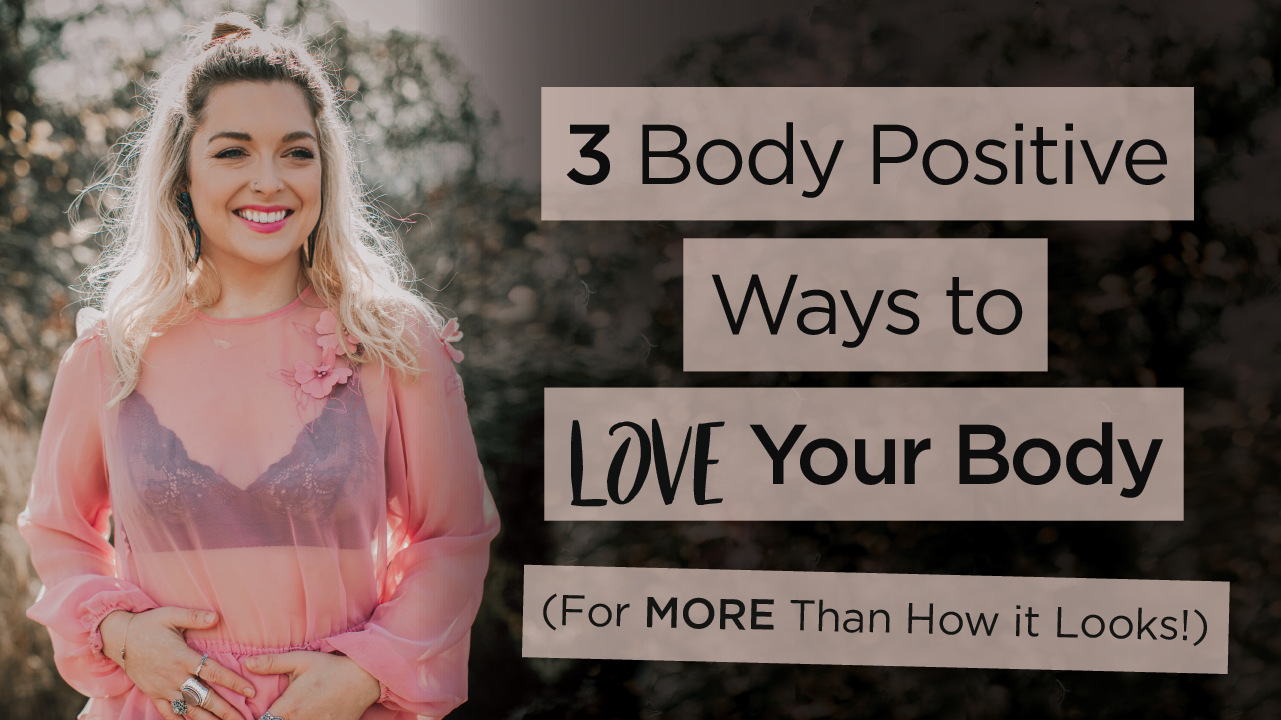
3 Body Positive Ways to Love Your Body (For More Than How it Looks!)Laura shares 3 body positive ways to love your body, beyond its physical appearance
So many people can relate to feeling down about the size, shape, or appearance of their bodies. If focusing on everything "wrong" with your body gets in the way of you feeling positive about it, then this video is for you! Laura shares 3 body positive ways to love your body, beyond its physical appearance.

Transcript:
It’s sad but true that so many people can relate to feeling down about the size, shape, or appearance of their body. If focusing on everything “wrong” with your body gets in the way of you feeling positive about it, then this video’s for you! Keep watching to learn how you can come to really love your body in an honest and sustainable way!
Hi everyone, I’m Laura Brown from Heart & Oak Therapy, supporting better, brighter lives.
We’re therapists who do regular videos on mental wellness, and give practical ideas and tips to make your life happier and more fulfilling – so hit the subscribe button to keep in the loop!
In my Victoria BC therapy practice, I’m really passionate about working with people who struggle with their relationship to their body and food. If that’s something you can relate to, I want to stress that you are anything but alone in that!
In fact, it’s super common for people of all genders to deal with some form of body image issues. That could look like feeling disconnected from your body in some way, feeling disheartened by the size, shape, or appearance of your body, feeling like certain body parts or regions of your body are bigger or smaller than they are – and that they’re therefore inadequate, or that your body will never look the way you wish it did.
These are all really complex issues in and of themselves, and we’ll definitely look at them more closely in future videos. But in this video I want to address the common belief that you can “should” your way into loving your body. In other words, I’m going to be talking about the discouraging practice of straining to convince yourself that you should just love your body, despite all the things in this world that make that way easier said than done.
To star this off, I want to make one thing clear: This is not an abstract, clinical issue for me. These are issues that are near and dear to my heart because I’ve lived them too. Because I have enough personal material to make a full feature documentary on my own journey through body image and food issues, I’m going to focus more on that in our next video – because otherwise this one would be way too long!
So let’s talk about some practical ways you can cultivate more genuine love and sustainable appreciation for your body.
1. Assess what it means to you to be disconnected from your body and/or to struggle to have your ideal body type.
The first thing I’d like to invite you to do is ask yourself a very important question: What does it mean to you to struggle to have your ideal body type? In other words, why is achieving your ideal body image so important to you? This question is all about getting down to ground zero and really checking in with those things that can be easy to take for granted.
Having an answer to this question is important because it supports you in understanding your body image more deeply, and how your body image is a response to various life experiences. This helps shift the problem from being all in your head, to fully understanding the context of how and why it exists. This can also help lessen the hold of shame.
There might not be a single, solitary answer to this question for you, and that’s ok! Life is complicated, and it’s more common for there to be a bunch of intersecting reasons than just one that stands alone.
For example, deep down, does it come from a longing to be accepted or approved of? Do you imagine that if you had the “right” body, you’d be more likely to be loved or included by important people in your life?
The answer to this question is bound to be very personal to you, so think about how this longing makes sense within the scope of your lived experience.
I’ve also written a blog post that complements this video nicely, so make sure to check that out on the Heart & Oak Therapy blog, which I’ll link in the description. In that post I provide some other guiding questions you can use to explore this for yourself.
2. Whose story is it that your body isn’t “good enough” as is?
So, once you have your own personal understanding of why achieving your ideal body image is so important to you, it can be helpful to ask yourself the question, “whose story is it that your body isn’t ‘good enough’ as it is”?
Are you the source of this story? Or is it possible that it’s come from someplace else? Is it a story you deciphered from ways you’ve been treated by people in your life? Could it be a common story in our society – one you’ve become so accustomed to hearing that you can’t even remember when it first started showing up on your radar?
The fact is, there is no objectively “right” body type to have. The very notion of an attractive body is totally contrived by culture. Want proof? Look at the history of just about any culture from around the world. For example, many different global cultures have made round bodies out to be a sign of abundance and fortune at various points in history. The super skinny or hourglass shaped woman, and the lean, muscular man are very much inventions of modern western cultures. If we’re held to those standards and told that’s how we need to look in order to be “good enough”, it doesn’t leave us many options other than to feel inadequate.
Once you’re able to identify who the story that your body isn’t good enough the way it is really belongs to, it opens the door to a few other things worth considering. Perhaps most importantly, where do you stand on that idea? If you feel sad, discouraged, frustrated, or afraid at the idea that your body isn’t good enough the way it is, does that mean you’re for that idea, or against it? Usually people don’t feel negative emotions in response to things that feel right or good to them, so if you feel down about that idea, that’s probably telling of where you really stand on it.
3. Strengthen or shift your relationship with your body
My third tip on how to love your body for more than how it looks has to do with strengthening or shifting your relationship with your body.
When you have a solid relationship with your body beyond its physical appearance, it becomes a lot easier to resist the story that you are unworthy unless your body looks a certain way.
Your appreciation becomes genuine when you really tune in to your physical body and recognize all that it does for you.
To get started on that, it helps to take up practices that allow you to really connect with your body, as a part of the person you are. Some guiding questions you can use include, “how does your body communicates its wants and needs to you? What sensations help get these messages across, and how does it feel when you take care of them?”, “When does your body feel best? When does it feel strongest? When does it feel most relaxed? When does it feel most well?”, “How does your body’s physical appearance represent its health and wellness, and to what extent? Like is it possible to be physically healthy and well, and to carry body fat? What feels right for your body? At what point does the amount of body fat impede or support your body’s wellness?”
I’ve included a link in the description to a post on the Heart & Oak Therapy blog that offers more questions like these to help guide you down your own path toward strengthening your relationship with your body.
One thing I really want to stress is that in a world that tells us we’re inadequate in so many ways, having a really positive relationship with your body is more likely to be a work in progress than an end game achievement. By doing this work, you’re going against the grain in a big way, and that’s a challenge! The last thing we need is to feel ashamed for not having a squeaky-clean body image on top of the struggles many of us already have. That’s just yet another layer of bullshit that our culture attempts to pile on top of us.
The fact that you are even here listening to me talk about body image tells me just how strong you really are. Your courage to honestly consider where you are at, and how you want things to be different is legit, and it’s hard but important work.
It can be hard to even admit that you’re struggling with your body image. After all, aren’t we all meant to be incredibly secure, confident, and independent people? But this work is gradual and takes time – it’s not just as simple as flicking a switch and going from night to day. By opening your eyes and ears to your own lived experience and understanding your relationship to your body in context, you can start to cultivate more and more appreciation for all the great ways it can serve you.
If this video has been interesting or helpful, go ahead and hit the “thumbs up” button below. For more helpful videos related to therapy and mental wellness, subscribe to our channel and hit the bell notification icon to make sure you stay in the loop.
Take care until next time, and keep doing the things that help you live a better, brighter life!

4 Ways to Address the Fears Behind Social Anxiety
Social interaction can feel like a risky proposition. Whether you see social anxiety as a clinical problem or a common challenge of simply living in this world, this post provides insights into what social anxiety is and tangible actions you can take to address some common fears behind it.
How Common is Social Anxiety?
74% of people fear public speaking more than death.
Let that sink in for a minute.
The fact that just shy of ¾ of the population fears public speaking above anything else is very telling of our collective sense of what it means to be in the spotlight. It speaks to the reality that social interaction (and especially being the centre of attention) is a risky proposition. It is the awareness of that risk that lies at the heart of social anxiety.
Regardless of whether you see social anxiety as a clinical problem or a common challenge of simply living in this world, this post provides insights into what social anxiety is and tangible actions you can take to address some common fears behind it.
What is Social Anxiety?
What are we really talking about when we say “social anxiety”? Generally speaking, it’s a term that describes fears around having negative social interactions with others. For some, social anxiety revolves around groups of new people, while for others it’s large crowds. It can also pertain to certain one-on-one relationships, or tie in to situations in which you have responsibility to others (like at a job).
4 common fears or worries that people relate to social anxiety include:

Not fitting in within small groups
Being judged for a feature of your identity or an aspect of your experience
Being seen or positioned as deficient, inadequate, or incompetent
Feeling unsafe in groups or crowds of people
With all that said, it’s important to acknowledge that the diversity of experiences that could be classified as social anxiety highlight a shortcoming of diagnosis in general: focusing on the experience of the fear, rather than on the specific contexts that support particular fears in existing in the first place.
As a counsellor, I notice that people find it far more helpful to explore and understand the context around their own unique experience of social anxiety, rather than trying to address it more broadly with catch-all tools and skills. That’s why I provide some guiding questions in this post to help you explore and address your own particular social anxieties.
Responses and Resistance to Socially Anxious Circumstances
Responses to the situations we associate with social anxiety can look many different ways. Perhaps the most recognizable response associated with anxiety in general is to avoid the situations in which it is most prominent. As an act of resistance, this makes sense, as it serves to mitigate undesirable experiences.

Other ways of resisting the negative responses and outcomes people associate with social anxiety can include staying quiet or censoring ourselves in groups, chattering nervously and filling the space with words, or carefully curating what we say in order to illicit positive responses. These ultimately all serve the important purpose of mitigating negative responses or encouraging positive ones.
A lot of people who describe themselves as struggling with social anxiety take issue with the constraints they feel around social situations. They long to feel free and at ease, and instead feel as though their life is made smaller by their fears. I believe that feelings always make sense within their given contexts, and so it’s fair to say that social anxiety is both an understandable response to interpersonal experiences, and something that would be relieving to feel less of.
For this reason, it can be helpful to address the specific fears behind your own unique social anxieties.
Addressing Social Anxiety Around Not Fitting In
Just about everyone can relate to the fear that they might stick out like a sore thumb when entering a new social group for the first time. This makes sense, because as I laid out in my post “Addressing the Social Roots of Your Anxiety”, belonging matters for our sense of dignity – and that’s important!
When it comes to social anxiety around not fitting in, there is most often one of two outcomes that people are most fearful of: being rejected or being excluded.

Both rejection and exclusion are understandably adverse possibilities that make sense to be avoided. Rejection is rarely, if ever, kind. It often comes with humiliation and alienation, which can make the experience all the more difficult, or even traumatic. Exclusion, on the other hand, can leave us feeling unwanted or discarded, with an implicit message that we aren’t good enough to be included.
When it comes to actually taking the wind out of anxiety’s sails around our fears of exclusion or rejection, there are a few tangible actions that can help. One is to go out on a limb and actually acknowledge that you feel anxious in those particular moments. As a clever social being, you probably already have a good read on people and circumstances that are safe to do that in. If you’re meeting a new group for the first time and they seem like kind, accepting people, simply acknowledging that you feel anxious when you meet new people can take the pressure to act like you feel at ease (or “normal”) off your shoulders. Otherwise, that pressure can just amplify the anxiety that you already feel in risky social interactions.
Some other more private or subtle strategies in these situations include:
Focusing on breathing slowly and intentionally if it feels like your breath is shallow and quick
Also, softening your abdomen and opening your shoulders while you breathe into your tummy can support more of a sense of being in control of your body (heart rate, breathing, perspiration, etc.)
Talking yourself through the fear of being excluded or rejected: If your fears come true, how can you deal with it?
What power or capacity do you have to handle negative social responses?
How have you dealt with them in the past?
Who do you know who deals with negative responses well, and how do you imagine they do it
What do you know about yourself that is at odds with the anxiety’s messages?
Taking Care of Fears of Judgment
Anxiety around the fear of judgment is similar to the fear of not fitting in, but different in some distinct ways. While they both relate to not belonging, the fear behind this kind of social anxiety is more about receiving a negative social response about a particular aspect of your identity or experience. This can look like fears of judgment for how you look, your sexuality or gender identity, your socioeconomic status, how you speak, your job or level of education, or stigmatized experiences you’ve had (such as abuse).

I know it goes without saying, but judgment sucks. It reduces us to a diminished essence far below who we actually are, and if it’s for something about ourselves that we really can’t help, it can really hurt. The hurt we experience for being judged is also very contextual. It probably doesn’t hurt to the same degree if it’s cast by a total stranger, versus a close friend, versus someone we don’t really know but admire, versus a family member.
The bottom line is that it is an affront to our dignity that erodes our sense of safety in social situations.
If you have anxieties about judgment, questions like these could be useful in helping address them:
What are the things you’re wariest of being judged for?
What is it about those particular things that makes them especially sensitive areas?
What do the people who care most about you appreciate most about who you are?
Do they know about the areas you’re sensitive about? If they do, why do you suppose they’re still in the picture?
How do you imagine they’d respond if they knew you were judged for what you’re sensitive about?
What do you imagine someone else’s judgment toward you would say about them?
Would their judgment speak more to fundamental problems with you, or to issues they have?
If you were to be judged for something you’re sensitive about, who would you go to for support? How would that help your sense of value or dignity?
Dealing with Being Seen as Inadequate, Deficient, or Incompetent
The fear of being deemed inadequate, deficient, or incompetent is similar to the anxiety around judgment described above. The discerning factor, however, is that this has more to do with measuring up and being “good enough”.

Being “good enough” is more or less synonymous with “acceptable”, and acceptance and belonging go hand-in-hand. Do you notice a pattern here? This just reaffirms the point that social anxiety has so much to do with belonging, and belonging has so much to do with dignity!
If you stop to think of the very notion of being “good enough”, there is an inherent nod to comparison and competition. This too says a lot about our culture. We are subjected to evaluation across so many of systems and spheres that we go through and belong to in life that it just makes sense for most people to have a radar for the extent to which they measure up with others.
If you struggle to feel like you measure up in the company of others, questions like these could help you navigate those issues:
If not “measuring up” feels like a scary or uncomfortable position to be in, what do you imagine to be the consequence?
What would it mean to you if that consequence was to come true?
In your mind, where do the standards for “measuring up” come from?
Is there anyone around whom it really doesn’t matter if they think you’re good enough or not?
Who does it feel it matters most around?
Who accepts you for the person you are, regardless of how proficient you are at certain things?
If there was a critic you knew you absolutely could not appeal to, how would you accept their negative appraisal of you?
Social Anxiety in Crowded Spaces
There are plenty of reasons one might feel a sense of anxiety or panic in large crowded areas. Often, this relates back to adverse or traumatic experiences people have had, which undermine their sense of safety in the community. That aside, you can probably relate to having an increased sense of tension in busy, crowded spaces, which is contrasted by feeling more relaxed and at ease in less densely-packed areas. No matter how you cut it, we tend to respond to busy spaces with more arousal than in their chiller counterparts.
Social anxiety in the context of big crowds is actually quite unique from the previous three varieties discussed above. What differentiates it from the others is the focus on physical safety above belonging and dignity. When people feel anxious at the prospect of being in a large crowd of people, they tend to be less concerned with being judged or excluded, and more worried that something untoward them might happen.

If someone has experienced violence, or is fearful of encountering a person or situation that would be scary or uncomfortable for them, the solution isn’t as simple as saying “Just don’t worry about it! I’m sure you’ll be fine!”. I generally see folks who are vigilant about the dangers of crowded spaces as having had the unfortunate experience of being awakened to the reality that bad things can indeed happen. On top of that, if you think about it, it can be a lot harder to watch your back when there are a ton of other bodies milling around you. Sometimes there’s good sense behind our sensitivities and aversions.
If you struggle with anxiety around crowds or big groups of people, these questions could help you explore that:
What makes crowded spaces different than those with fewer people when it comes to your anxiety level?
What are you most wary of having happen when you’re in a crowded place?
What precautions do you take to create safety when you’re entering crowded spaces?
If you could imagine something happening that would take all your worries about this away, what would that be?
How have you created safety in the past when you’ve felt fearful or unsafe going into crowded spaces?
When you reflect on that, what does that tell you about your capacity to handle hard situations?
Knowing Your Social Anxieties
Being aware of your anxieties, fears, and worries can help you navigate them with intention. This can be hard to do when we’re just rolling with our anxious impulses. When you have a more robust understanding of the fears behind your social anxiety, it’s easier to negotiate with them and live in more preferred and expansive ways.
What kinds of social situations do you find you feel most anxious in, and why?
Do you have strategies for navigating your own feelings of anxiety in social situations?

Addressing the Social Roots of Your Anxiety
Not everyone feels anxious in the exact same settings and circumstances, but absolutely everyone can identify with those awful feelings of dread, unrest, worry, and panic in some way, shape, or form. Social anxiety gets a lot of attention, but did you know that other forms of anxiety that may not appear to be social in nature actually are? In this post Will Bratt explains how and why most anxiety is, at the end of the day, social in nature, and how identifying that for yourself can help you feel more at ease in anxious moments.
Most Anxiety is Social Anxiety
Everyone feel anxious.
Not everyone feels anxious in the exact same settings and circumstances, but absolutely everyone can identify with those awful feelings of dread, unrest, worry, and panic in some way, shape, or form.

With the seemingly infinite number of specific anxieties that human beings could have in today’s world, social anxiety is one that a huge number of people describe themselves as experiencing. You probably know social anxiety as the quick heart rate and sweaty palms that go along with feeling out of place in social situations. People also describe it as fearful thoughts around judgment, rejection, exclusion, and being socially incompetent in interactions with others.
As a counsellor in Victoria BC, I have more conversations about anxiety than any other concern people bring in to therapy. Through these interesting and diverse conversations, I’ve come to notice a common theme: the anxiety that people consider to be more “generalized”, or even anxieties about specific worries like health or death, almost always relate back to relationships with other people too.
In this post I explain how and why most anxiety is, at the end of the day, social in nature, and how identifying that for yourself can help you feel more at ease in anxious moments.
The Purpose Behind Anxiety
Like most aspects of human experiences, anxiety is one of those things that everyone can identify with on some level, and which everyone experiences somewhat differently from person to person. So, while taking these differences into account, anxiety is typically described as the emotional response to anticipated adverse events, experiences, or outcomes.
As a responsive emotion, anxiety draws our attention to what could happen, in the interest of avoiding or mitigating negative experiences. In this way, even if we don’t often experience it as helpful, anxiety is primarily concerned with our safety.
Anxiety as a Social Phenomenon

If anxiety is mostly about anticipating negative experiences or outcomes in the interest of safety, why do so many people experience social anxiety? I mean, it’s not like rejection, exclusion, or judgment ever really hurt anyone, right?
The reality is, belonging does matter. Despite the age-old rhetoric that celebrates the “lone wolf” and staunch individualism, we are far more interdependent than independent.
Even if you think about it on a purely evolutionary/biological level, human beings have needed each other for survival since always. Of course, humans in the 21st century are different in some very distinct ways than our predecessors from ages past, but the importance of belonging is very much alive and well in our hearts and minds today.
Belonging and Social Anxiety

The importance of belonging is key to understanding why people experience social anxiety. While we (urban adults in particular) may not need the acceptance of the group in order to survive predatory animals or weather brutal storms, cultural constructs like dignity, esteem, value, and worth, carry significant weight in the social world. If you’re skeptical, just ask anyone who has thought about ending their life after struggling against bullying, abuse, or social exclusion/rejection. Belonging is life-affirming and alienation and oppression can kill.
Anxiety’s Social Link
We know that social anxiety is defined by fears and worries around belonging and acceptance. But how does this common social denominator relate to other forms of anxiety?
I’ll illustrate this with an example:
When I first met with Paul, a 30-year-old man who grew up in a small community in BC, he described himself as struggling with anxiety, with a particular focus on his health. He explained that he recently learned through a medical exam that there was a mass in his lung, and that he was understandably afraid it might be cancer. I asked questions to draw out more of a sense of the meaning behind his fear – what it would mean to him if he was struck with a potentially fatal illness. Through his responses to my questions, he explained that because of the hard life he’s lived, he’s kept close relations at arm’s length. As many people can relate to, he felt fearful about the prospect of being vulnerable and opening up about himself and his own struggles to people who really matter to him. While more superficially, his anxiety was about getting sick and dying, at the heart of the matter was a fear of losing the opportunity to cultivate closer, more intimate relationships with his family. This realization opened the door for him to take care of those relationships in more direct and tangible ways.
Through Paul’s example you can see how what sounded at first like a very personal and private worry was actually relational in nature at its core. It’s easy to see anxieties like Paul’s through the more common individualistic lens, but when we really start getting curious and putting anxiety in context, we can see that there is a crucial social aspect more often than not.
Why It’s Helpful Identifying the Social Side of Anxieties
As is clear in Paul’s example above, recognizing the social aspects of our anxieties gives us something concrete to work with. So often the assumption is that we need skills or tools to manage anxiety, when in fact action can be taken to address the anxiety-provoking situation at its core.
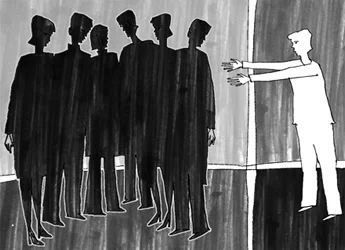
In Paul’s case, by recognizing that his anxiety was really based on the fear of losing the opportunity to get closer with the important people in his life, he was able to take the action necessary to address that concern.
I think it’s also worth noting that anxiety has a way of making it difficult to facilitate the process of coming to these realizations on our own. We can get so wrapped up in worry that we think in very circular ways, making it hard to move forward. This is where talking to a therapist can really help. Counselling for anxiety can not only help you identify and practice the skills and tools to ease anxiety in anxious moments, but also to see the tangible factors that could make all the difference if they were to be addressed.
Identifying the Social Side of Your Anxiety
Whether or not you work with a counsellor to understand the context around your own anxiety, having questions to explore and make sense of the social side of your anxiety can make a big difference.
You can use questions like these to do that work yourself:
If your anxiety could speak for itself, what fears or worries would it express?
What relationships in your life relate most closely to those fears or worries?
What would it mean to you if those fears or worries were to come true? What regrets would you have?
What fears or worries have made it hard to take action to resolve the anxiety?
Are there particular social responses you fear you might receive?
Who else does this issue matter to? What is their relationship to the situation?
How does your anxiety relate to your relationship with them?
If you knew you could do something that would make everything better, even if you’re afraid to do that thing right now, what would that be?
What has made it hard to take that action up until now?
Addressing Anxiety Through the Broader Social Context
The problems we call “social anxiety” are quite obviously social in nature, but that doesn’t mean that other kinds of anxiety are not. The process of exploring and understanding the social context around your anxiety can open new doors to addressing issues on a more real and tangible level. In this way, addressing your anxiety through the broader social context is empowering and leads to more sustainable resolution across time.
Are there certain social relationships that you notice you feel more anxious about than others?
How do you take hard but important steps toward resolving social worries?

How "Self-Love" Misses the Mark
There’s a popular idea out there in self-help land, which I’ve heard over and over and over again:
“You just need to love yourself more! If only you had unconditional love for yourself, your life would be complete.”
Self-love is presented as this thing that you have to create within yourself, and can’t be dependent upon anyone else’s love for you. It is often described as something that is missing in our lives – an ideal that we should all be striving for.
You've probably been introduced to this idea yourself at some point along your journey. If you're working on addressing things in your life, it's hard to miss it. Read on to learn how I came to question the "self-love" dogma, and the perspective that came to find far more helpful to my own self-development work.
Questioning the "Self-Love" Dogma

As a therapist in Victoria BC, a lot of people assume that I “have it all together”, and that I always have. The truth is, a lot of the good stuff I have going on in my life has been hard earned.
You may not know it to look at me, but I am a recovering self-help junkie. For years I was dissatisfied with my life and how I felt, and searched for all of the answers I could find in books. And they helped – a bit. But in some subtle, unexpected ways, they also made me feel worse: that there was always something I wasn’t doing well enough to be a self-help success story.
There’s a popular idea out there in self-help land, which I’ve heard over and over and over again:
“You just need to love yourself more! If only you had unconditional love for yourself, your life would be complete.”
Self-love is presented as this thing that you have to create within yourself, and can’t be dependent upon anyone else’s love for you. It is often described as something that is missing in our lives – an ideal that we should all be striving for.
You've probably been introduced to this idea yourself at some point along your journey. If you're working on addressing things in your life, it's hard to miss it. Read on to learn how I came to question the "self-love" dogma, and the perspective that came to find far more helpful to my own self-development work.
How "Self-Love" Can Set You Up To Struggle
Self-help gurus suggest a myriad of ways in which we don’t love ourselves enough:
“If you loved yourself more, you wouldn’t have chosen a violent partner”
"If you loved yourself more, you wouldn’t be an addict”
"If you loved yourself more, you wouldn’t eat when you’re not hungry”
"If you loved yourself more, you wouldn’t need to be a victim”
"If you loved yourself more, you wouldn’t feel so insecure”

You get the idea. These messages abound, so leave a comment below with examples you’ve seen and heard.
For a long, long time, I bought into this idea too. I filled journals with positive affirmations, attempting to convince myself with every carefully written letter that I could love myself if only I wrote more. I believed that if only I willed it enough in my head or on paper, that one day I would come to love myself enough and my problems would evaporate.
But ironically, it didn’t work that way. I actually ended up feeling like I loved myself less, which in turn had me feeling even worse. No matter how much time I dedicated to writing out these affirmations, I still felt like shit. The words felt hollow and meaningless. I thought, “I should be loving and accepting myself”, which meant I was failing even more and loving myself even less. It was painful!
On top of all that, there’s also this idea out there that you have to love yourself unconditionally before anything good can really happen in your life. You have to love yourself before you can be in a “healthy” intimate relationship. You have to love yourself before you can be a “good” parent. You have to love yourself before you can have confidence in the things you do. All in all, if you don’t believe you love yourself unconditionally, then that is the source of your suffering. And life will only suck less if you somehow learn to love yourself from reading the right books and doing the right things.
What I Learned the Hard Way About “Self-Love”

It took a long time for me to finally come around to being able to say: FUCK THAT SHIT! After years passed with little to show for the hard work I was putting in, I grew seriously sick and tired of being told that my thoughts, actions, behaviours, emotions, and relationships to others represented how much I must fundamentally dislike myself.
What if instead of looking at how much people don’t love themselves, or how much room there is left for us to love ourselves (AKA “glass half empty”), we started looking at how our responses to adversity are actual demonstrations of our existing self-love and self-care?
Through the work I’ve done with my many amazing clients, I’ve come to believe that most, if not all, people do love themselves already - even if that sense of self-love is hard to feel at times. Sometimes true self-love shows up in unlikely ways. Demonstrations of self-love can be found in the very behaviours, thoughts, and feelings that some self-help gurus use as evidence that we don’t love ourselves enough. My own critical analysis of this perspective has been made possible by my use of response-based practice – one of the key foundations of my counselling work.
My response-based lens helps me recognize how actions, thoughts, emotions, and other forms of expression often serve to maintain or uphold our dignity, create safety (physically, emotionally, or otherwise), and minimize or mitigate experiences of hurt or pain. When we look at these kinds of actions or responses without judgment (even if some might label them “unhealthy”), we can more easily see tangible examples of how we already care for ourselves ourselves.
How to Recognize Self-Love in Unlikely Places
The loving and life-affirming nature of our acts of resistance can be more easily spotted when we look at how we resist adversity in our daily lives – whether it be violence or abuse from others, shame, humiliation, and embarrassment, experiences of prejudice or discrimination, or the negative internal dialogue in our heads.
For example, there is a cultural standard of beauty and thinness that I have struggled with since around the time I started going through puberty (and likely before that too). The cultural discourses that support this perspective stand in stark contrast to the idea that we ought to love and accept ourselves unconditionally, as it suggests that we are only lovable if we weigh a certain amount and look a certain way. Proponents of the self-love bandwagon would suggest that I ought to just love myself regardless of these images and messages – and that I should police my thoughts and “inner critic” until I believe otherwise. I don't know if you've ever struggled against ideas of how you "should" be, but many people find this very difficult to do.

What I find to be more empowering is to look at how my responses to these messages are actually signs of how I do love myself already. I mean, do you think I would feel like shit about not measuring up to cultural standards if I didn’t already love and care about myself on some level?
First of all, the mere thought that we don’t measure up is not born within our minds alone: it is an idea that is massively supported by our culture. Everything is a competition about who is the most beautiful, successful, wealthy, and popular person on the planet. Secondly, the fact that I feel sad and dissatisfied with the notion that I don’t measure up tells me that I really do care very deeply about myself. If I didn't, I wouldn't have lost sleep over it. It's like Will's cheesy saying, "The bigger the meaning, the bigger the feeling". The fact that you feel a sense of despair in response to the suggestion that you're inadequate is, in itself, an act of resistance and a sign of self-love.
For me, even the “disordered” eating practices that I once took up in response to not measuring up came from an unlikely place of self-love. Although there were serious problems with those practices when it came down to my health and wellbeing, they illustrated that I cared about myself and my sense of dignity deeply. Although the disordered eating practices I used to try to "measure up" are not something to celebrate, they show how acts of self-love can come in unlikely forms - as problematic as they were for me. On top of that, when those practices didn’t feel good, when I was dissatisfied with what I was doing to my body, that sense of dissatisfaction is another representation of my love and care for myself.
Your Secret Self-Love
Because these ideas are somewhat radical, you might need to play around with them a bit for them to really "click". It took me some time to explore how they make sense, and now I have a tough time not spotting the life-affirming resistance in people's actions.
To help you spot self-love in unlikely places, try looking at your own experience with questions like these:
If you experience something like harsh self-criticism, or if you feel like you don't measure up, what efforts do you make toward improving? (look at those efforts without judgment for the time being)
Whether its within the walls of your own mind, or in response to other people's words, how do you feel about the sentiment that you're "not good enough"? What emotions do you respond with?
If you respond with sadness or despair, what longings are behind that? If your sadness could be translated into an "I wish..." statement, what would that be?
If you respond with anger, in what way could that be a form of protest? What could your anger be standing against?
How are these responses in favor of your dignity?
Is it possible to want to be better or different in some way without caring about yourself on some important level?
Do you imagine having the same struggles if you were indifferent toward yourself?
Who would it be/is it most meaningful to receive affirmation or validation from?
What part of yourself does that resonate with?
Self-Love Isn't Black and White
The most important message I hope to get across through this post is that self-love and the extent to which we value ourselves is all about nuance. It speaks volumes about what really matters to you to care enough about something to get upset or down about it. So the next time someone says "You just need to love yourself", think of all the ways in which your feelings and behaviours demonstrate that you absolutely do.

3 Crucial Factors For Creating (and Sustaining) Change In Your Life
The process of creating meaningful life changes is rarely easy. We can find ourselves feeling stuck, and learn some hard lessons along the way. In this post, Laura Brown offers deeply personal insights on 3 crucial factors for creating change, which she learned the hard way through her own self-development work.
What I Learned the Hard Way (so you don't have to)
Going through puberty was utter hell for me. 😳
As the first girl in my grade to catch her menses, I was the princess of PMS purgatory. I was alone on an island for those first few months, attempting to survive the uninvited change my body was putting me through. “Becoming a young woman”, as some say, quickly inspired me to loathe everything about myself, especially my body.

From those adolescent days until well into young adulthood, the struggle with hating my body waxed and waned. There were periods where I felt totally disgusted with my body – standing in front of the mirror in short shorts I only dreamed I could wear in public, hurling horrible obscenities at my innocent thighs that had the audacity to rub together when I walked.
The hatred became the driving force for countless failed attempts to starve myself. I believed I could punish my body into skinny, hot submission. I promised my thunder thighs I would love them once they finally got in line and became half their size.
You would think that after 20 years of trying in vain to change my body, that I might give up – or at least get some serious help for my secret obsession. So, how did I manage to change things so drastically after so many years of struggle? The full story is far too long to share in one blog post, but I can outline some important factors that seriously helped me continue with my desire to change, in a kinder, more compassionate way.
The Role of Motivation, Trust, and Patience on the Road Toward Change
A few pieces of this big, complicated puzzle, consisted of some pretty basic goal attainment fundamentals: motivation, trust, and patience. While straightforward in theory, it was far messier and challenging than the basic instructions you can read in any self-help book.
Finding Motivation Through Our Struggles
For me, being motivated first required me to clearly identify exactly what I was striving to do. What was I motivated by? Was it the same hate, disgust, and shame I had experienced throughout my dramatic and exhausting adolescence? How did I want it to be different this time?
I knew what I didn’t want: to hate or mistreat my body. To stuff myself with food when life was hard. To be overweight and unhealthy while longing to feel different.
I also knew what I did want: to love and accept my body. To be a healthy weight that had my body feeling energized and full of life. To nourish my body with foods that it loved and appreciated, and tasted good! To be able to wear those short shorts, even if my thighs rubbed together.

Imagining the outcome I wanted was a big help in feeling motivated to do things differently. But the motivation was inconsistent, especially when I slipped up, stuffing myself to the point of button-popping bloat. There was fear there, a belief that if I hadn’t worn those short shorts with pride yet, it was a mere pipe dream.
It was in realizing the inconsistent nature of my motivation that I began to treat it differently. I decided that I wasn’t going to rely on myself to feel naturally inspired, but that I was going to have to do some real work to create a foundation for my motivation to stand on.
So, what did I do? I considered all that I wanted with regards to my body and food, and logically assessed all that I would need to do (within my control) to fulfill these goals. I then measured the level of motivation that I currently felt to make these changes in practice. And let’s be honest, who naturally feels motivated to put the sugary delight of ice cream down in the heat of an emotional breakdown?
When I recognized what areas I lacked motivation in, I gathered outside sources to inspire my motivation to grow. I found inspirational stories told by people who had struggled in similar ways, only to overcome and live differently.
I also made a commitment to look at my own life for my stories of success. Even if it was in a seemingly meaningless decision to close the fridge door when I wasn’t actually hungry.
Motivation can be there for you when you need inspiration to pursue your goals. When your energy is drained and you want to give up, it can help you keep going. It can act as your own private cheerleader, encouraging you, believing in your ability to persevere and succeed.
Connecting more deeply with your own motivation
Because it's always helpful to have reflective questions to guide your self-development work, here are some questions you can use to connect more deeply with your own motivation:
What are you motivated to do day in and day out? And why?
Why do you want to achieve this desire of yours? What’s in it for you? How will life be different? How will you feel?
What is it like for you to feel motivated? What makes it a preferred state of being?
Who serves as inspiration for you and your desires? Who has achieved what you’re setting out to do? How do you relate to them? How are you similar?
If you’re struggling to feel motivated, what might be getting in the way? Do your beliefs align with a feeling of motivation? Do you have any evidence that what you want to do is possible?
Simply put, the answers to these questions can lay a strong foundation for your internal motivation. The more detailed you can be, the better.
Developing Trust
To be perfectly honest, harnessing motivation after giving it a little bit of attention, wasn’t that challenging for me. Trust, on the other hand, was a whole other ball game.
Given that I had dedicated a good 20 years to this desire, without any real long-term change, I didn’t have any reason to trust that my present efforts would be fruitful.
I had developed the belief that if I didn’t drop five pounds of excess fat over night after one day of eating well and a bit of exercise, I was doomed. It was proof that my body was somehow incapable of being healthy and fit. The food I would stuff down my gullet in response to this realization was further evidence that I could not be trusted.
I truly did not trust that things could be any different. That is, until I actually recognized my lack of trust. Again, it was helpful (and necessary) spending deliberate time first recognizing where I was at with trust, and then what was getting in the way of me experiencing more of it.

I had to work through a whole hell of a lot of past experiences that I had previously judged as "proof" of my everlasting failure with this mission. I worked to make sense out of my present lack of trust, and what was required to experience any semblance of something more positive and conducive to change.
I asked myself what I needed to believe about this goal and my capacity to achieve it. I explored other achievements I had conquered in the past, and how these could lay a foundation of trust in my abilities.
I then considered the logical reasons for trusting in this goal as being achievable. I focused on how other people had achieved it, and acknowledged that it is physically possible for my body to be healthy. Google Images became my best friend, as I could easily pull up example after example of people becoming fit and achieving their health and body goals.
I kept this information close at hand, and reflected on it regularly to build more trust.
I also started taking action and looking for how this experience could further the foundation of trust. I assessed how my body felt to make the lifestyle changes, even if my body didn’t look any different after the first day.
I took it a step further and worked on cultivating bigger beliefs about my capacity to achieve my desires based on all I had already done in my life. Even the seemingly menial tasks were pieces of evidence that I could trust in myself.
This is the practice of trust. It is something you do, something that you can engage in.
What evidence do you have that you can trust in the possibility of achieving your desires?
What I’m trying to say is that trust is another crucial factor on the road to achieving desires.
Trust ties in to your beliefs about yourself and your place in the world. Trust can be there when the results aren’t showing up as quickly as you would like. It can ease your worry and frustration, and help you in continuing in the face of obstacles. It can support you in taking calculated risks, and addressing fears. It is the antithesis of doubt.
Questions to help you feel more connected to trust
What have you been able to achieve in the past that required your trust?
How do you presently rely on trust (and likely take it for granted)?
Why are you able to trust in the things you do?
How is A likely to lead to B? How do you know?
Did you experience trust the first time you tried? What helped in building trust?
The Real Kicker: Patience
UGH. I hate being patient.
Just writing about patience brings up memories of my dad pleading with me to be patient and temper my relentless quest to get what I want NOW.
Upon reflection, I realize that patience has been an even bigger struggle for me than the issues with my body.
The world we live in, with the unprecedented accessibility to instant gratification, has not helped matters. With the ease of Google search, I have become the queen of reading spoilers and binge watching Netflix into the wee hours of the morning. I want it all, and I want it NOW!
When I mixed impatience with my desire for my relationship to my body and food to be different, things just got harder. You see, no matter what evidence there was that I was making progress toward attaining my goals, it was never good enough. It didn’t happen fast enough, or the evidence wasn’t big enough to make space for more than a sliver of patience. And so I was left frustrated with myself and the world, figuring that something must be seriously wrong with my metabolism if I didn’t drop 5 lbs of excess fat over night.
Again, the change boiled down to a whole lot of awareness. There was no chance I could change this pattern until I actually realized that I had a serious issue with patience.
I reflected on what got in the way for me in being able to withstand a bit of time and effort before seeing results. I considered what helped me feel more patient in different scenarios. I realized that patience wasn’t born in me, but it could be practiced and developed.
Perhaps you can relate? If you're human, you can probably identify with the feeling or fear that if something isn't happening right now, that it won't happen ever. It's in these moments that patience can be your ally.
Some Patience-Building Questions
How do you feel emotionally and in your body when you're waiting for efforts to pay off?
If you feel uneasy, anxious, or afraid, why do you suppose that is? Where do you think your discomfort comes from?
How have you eased that discomfort successfully in the past?
When has calling on patience been helpful to you in the past? What achievements has it supported you in bringing to life? How did you access it then?
How would you support a younger person in being more patient? What tips and guidance would you give them?
Tying Motivation, Trust, and Patience Together
Throughout my journey of cultivating the virtue of patience, I learned that motivation and trust are enormously helpful. As pillars of support, motivation was there to inspire me to take action in the first place, and trust helped me believe that the action would eventually pay off. With a clear focus on how I wanted these three factors to support me on my quest to creating and sustaining change, it has been a much different experience for me than it was before I clued in to their importance.
Using the questions above, you can feel more connected to your very own motivation, your trust in your abilities, and your patience to wait for the seeds you sew to sprout.
When have you found motivation, trust, and patience to be assets along your journey?
Is there one that has served you especially well, or that has been particularly difficult to connect with?

What I Wish I Knew About Handling Fears, Doubts, and Worries
Fear is naturally something to be avoided. That’s how it works! It tells you, “that thing might not be safe”, and you, as the smart person you are, do what you can to keep bad things from happening.
You’ve also probably experienced how it can be counter-productive to listen to your fears all the time. While they largely have your best interests in mind, they can also show up when you have an opportunity to challenge yourself and grow.
In this post, Laura Brown offers her hard earned knowledge on how to keep fears, doubts, and worries from stopping you along the path toward bringing your desires to life.
“It’s too hard!”

“I’m scared I can’t do it!”
“I don’t have what it takes, so why bother trying?”
These are familiar thoughts that I have had throughout my life, whenever I have dreamed of taking on a big change or aspiration.
Sometimes they show up as quiet, pesky thoughts that I can easily swat away with my sparkly magic wand of positivity. Other times they’re really REALLY loud, ominous, and devastatingly convincing. When that’s been the case, I’ve had to summon all my courage to keep from getting stuck in a rut.
Perhaps you can relate. These kinds of thoughts stem from our bigger, deeper feelings of fear, doubt, and worry. They are skilled at creating a state of confusion and distracting us from how we want to be feeling: confident, bold, and focused on bringing our desires to life.
In this post I offer my hard earned knowledge on how to keep fears, doubts, and worries from stopping you along the path toward bringing your desires to life.
Sitting With the Discomfort of your Fears
Let’s be real: we want things in life to come easy to us, and we don’t want to experience the discomfort that our fears, doubts, and worries bring. This is both perfectly natural, and often times counter-productive.

Fear is naturally something to be avoided. That’s how it works! It tells you, “that thing might not be safe”, and you, as the smart person you are, do what you can to keep bad things from happening.
You’ve also probably experienced how it can be counter-productive to listen to your fears all the time. While they largely have your best interests in mind, they can also show up when you have an opportunity to challenge yourself and grow. They deter you from taking risks that could actually bring you closer to bringing your desires to life. If your fears, doubts, and worries were to have things their way all the time, your life would be stagnant, in a constant state of maintaining the status quo.
When it comes to actually sitting with the discomfort of your fears, doubts, and worries, a common and understandable response is to find distraction and avoid actions that align with taking risks. There have been a number of years where this was a primary focus of mine. I’ve always been a big dreamer, but it’s taken me a lot of personal work to actually put one foot in front of the other and take concrete steps toward my aspirations.
My ways of avoiding action were sneaky. I mean, sure, I would do things that you too might notice yourself doing, like binging on TV shows and scrolling endlessly on my phone, but I would also do what looked like meaningful work, minus the follow through.

I would devote hours and hours of time to planning, looking meticulously at the how and what that would lead to the results I was seeking. But when those results didn’t appear after a week of work, I would hear those discouraging and destabilizing whispers of my fears, doubts, and worries, and ultimately get off track. I repeated this process again, and again, and again.
In retrospect, I believe a big part of the problem for me was that I didn’t pay attention and engage much with these feelings. I had deemed them enemy #1 to be fought off or to surrender to (depending on my energy level that day). I hadn’t taken the time to ask what those fears and doubts really had to say about what I was doing. What were they based on, and why were they showing up when they were?
Although I’m not a big proponent of psychological diagnosis, reflecting on this tedious process reminds me of Einstein’s saying, “Insanity is doing the same thing over and over and expecting different results”.
Through the personal work I’ve done on these issues, I’ve learned that acknowledging your fears calls them out and allows you to assess their validity. It can also help you in determining whether or not these fears and doubts are useful to listen to, or if they're worth disrupting.
Disrupting Your Fears, Doubts, and Worries

Challenging your fears, doubts, and worries might feel like the last thing you want to do, preferring instead to distract yourself and pretend they’re not there. But they’re showing up for a reason, and facing them can be empowering.
Here are some questions that can help you along that path:
Where do you think those fears and worries came from? What experiences do they remind you of
Who else that you know of has similar fears, doubts, or worries? What experiences do you share with them?
If your fears were to help you avoid experiencing something negative, what might that be? Why does it feel important to avoid having that kind of experience?
When those fears are present, how do you respond? What do you feel most inclined to do/avoid doing in those moments?
Are there actions you’ve considered taking but felt too afraid? If so, what were they and how did you decide against taking them?
By reflecting on questions like these, you can get a clearer sense of where your fears, doubts, and worries are coming from. This can help you take a more compassionate stance with yourself, while also considering how you want to engage with those concerns. Who knows, perhaps there’s something worthwhile in their message, but you can’t know until you really understand where that message is coming from, and how it makes sense as a response to your lived experience.
Calling Out the “Buts”
Sometimes it can be hard to pinpoint a worry or fear. This is when it can be useful to pay attention to the language you use. What words come to mind when you think about taking action and you feel constrained by fears?
One word that aligns very closely with the language of worry or fear is “but”. Many of us use that word often and take it for granted, but how and when we use it is a very good indicator of aversions we have. These might sound like,
“I would like to be healthier BUT…”
“I would like to be in a loving partnership BUT…"
“I want more friends BUT…”
The statements that follow the “buts” can take on many different forms, such as,
“…I don’t have the ability or capacity to make it happen”
“…there are forces outside of my control that will get in the way.”
“…there is something wrong with me that makes this impossible.”
What follows the “buts…” for you? What fears, worries, or concerns are they based on?
Is your desire for change greater than the level of fear you experience? Are there ways to gently challenge the fear in safe and manageable ways?
Putting “Buts” in Context
Up until recently I believed that there was something fundamentally wrong with me that would prevent me from having a body that looked the way I wanted it to. I longed to be fit and healthy, to let go of extra body fat, and to feel fantastic in my body. But I doubted that this could be possible. Maybe my metabolism was broken, or perhaps I didn’t have the ability to be consistent enough. Those were a couple of “buts” that got in my way.
When I got down to doing this work myself, I recognized that my “buts” were supported by faulty evidence based on the prior attempts I had made to create change in my body (all of which had fallen short). When I finally addressed the ideas, I took a close, honest look at my past efforts by asking questions like, “What had I done”, “How long did I try, and what were the results?”, and “What got in the way of me continuing to try?”
It soon became clear to me that the approach I was taking did not support me in being able to maintain a consistent effort. I tried too much at once, and restricted my eating so greatly that my body rebelled with cravings that no amount of will power could battle. I learned that I needed a realistic, achievable approach that allowed me to be consistent day in and day out until I reached my goals. I saw that the problem wasn’t some inherent shortcoming within myself or my body, but in the strategies I tried.
I also gathered logical evidence to counter the fear that there is something outside of my control preventing me from having the body I want. I googled the hell out of what could truly prevent this desire from coming to life and learned that it would be highly unlikely. There are factors that can slow down the process, such as my hypothyroidism, but it is still possible for my body to change.
This is when logic can come in handy. When you think about your desire, what do you think needs to happen for it to come into fruition? Break it down in detail:
What knowledge do you need?
What action do you need to take? What are all the small steps you can think of?
Who could help?
What skills might you need?
What might you need to learn or practice?
Working Through Your Worries, Fears, and Doubts
Once you’re able to identify what your worries, fears, and doubts are, and you feel fluent in noticing the “buts” that get in the way, you can start creating a case against them.
Questions like these can help you through that process:
Who do you think believes in you the most? What have they observed about you that supports their perspective of you? What evidence would they give you to support you in believing in your abilities to achieve what’s important to you?
When assessing beliefs, ask yourself how you know that belief to be true? What evidence is there to back up this belief? What choice do you have in holding that belief? When was it more or less true for you? Who else is it true for? Who is it not true for? How do you know?
What are some beliefs that have changed throughout your life? What did you once believe was impossible, that you now believe is possible? How did that change occur?
If you believe that it is impossible to change in the ways you long to, what would have to be different for the change to occur? What could others do to make it easier or harder for you?
What evidence do you have of your personal success in other areas? What challenges have you overcome throughout your life? What universal challenges have you faced, and learned through trial and error to overcome?
Critically assess your beliefs – why do you believe in this? What evidence do you have in its truth? Why do you want to believe this?
Who can you invite to be a cheerleader when doubt and worry come into the picture?
Moving Forward From Fear, Doubt, and Worry
Nearly everyone struggles to take action toward meaningful goals at some point in their lives. Fears, doubts, and worries are generally the common denominators across these difficult times. While they are understandable responses to our lived experiences, sometimes they do their jobs too well, and we end up sacrificing movement for safety. If you take the time and really get to understand where your fears, doubts, and worries come from, you can then respond with more intention, and ultimately take the wind out of their sails.
How do you deal with fears, doubts, and worries in your life?
What helps you take risks to challenge fears, doubts, and worries?

Depression or Dilemma? How Context Makes the Difference Between Feeling Stuck and Empowered
As therapists, we have a lot of conversations with people who describe their suffering as “depression”. Though “depression” can mean something different from one person to another, there is often a common element of feeling stuck with a sense of profound despair. However, for many people, depression isn't just about feeling stuck in that despair, but about the real world factors that constrain their capacities to make their lived experiences better. In this post Will Bratt illustrates how it can be empowering to look more at the broader context behind the depression.
A Problem With Depression
As therapists, we have a lot of conversations with people who describe their suffering as “depression”. Though “depression” can mean something fairly different from one person to another, there is often a common element of feeling stuck with a sense of profound despair.

If you think about it (or if you’ve actually lived it), feeling stuck can be terribly depressing in and of itself! To feel stuck is to feel constrained from pursuing your hopes and dreams, and there’s nothing cheerful or positive about that.
In the world of mainstream therapy and mental health, it is the experience of despair, along with the associated thoughts, feelings, and behaviours, that get the most attention. When those parts are the focus, we naturally tailor our efforts toward “fixing” them. The body of mainstream psychological literature tells us that that is where the problem of depression both begins and ends. We therefore strive to think, behave, and feel differently, often in spite of relevant conditions of our lives.
As you can imagine, it’s difficult to get very far when that is the case. Folks in situations like these often feel unsure of what they can do, relying on professionals to help “fix” what’s wrong.
Using Context as an Ally

What gets left out of those conversations and efforts is an exploration of the broader context – the aspects of our lives and experiences that the depression is in response to. For many, it’s not just about feeling stuck in a state of profound despair, but about the real world factors that constrain our capacities to make our lived experiences better.
To put it simply, the “stuck” feeling that corresponds with depression is often a response to a dilemma – to negative circumstances that feel hard or scary to disrupt.
But don’t despair, there’s hope in that too! When that is the case, although we may feel stuck between a rock and a hard place, there is an ever-present possibility to take action to change things – even though we may be afraid of the outcome.
A Depressing Dilemma
Here’s an example to illustrate how a person’s depression can be more aptly seen as a response to a dilemma when enough context is given:
When Aryn came into my office for the first time, they described themselves as “struggling with depression”. They described having pervasive feelings of despair, frustration, and great difficulty focusing on their work. I became very curious and asked a lot of response-based questions to help clarify the broader context. They described how they had spent 10 years studying engineering, which they got into because they were told they could get a good job when they finished. That turned out to be true, but after just one day of working for an engineering firm, they had a panic attack in response to imagining spending the next 30 years doing that work. For Aryn, the work left a lot to be desired.
Aryn promptly quit that job and returned to school to pursue a graduate degree in the same field. Unsurprisingly, they struggled to find joy in their studies, and found themselves feeling an increasing sense of despair and anxiety. I asked about their worries around the possibility of changing direction in their career, and they acknowledged their fear of how their family members and in-laws would respond. They feared being coloured as “flaky” (a term that had been used against them in the past), having the legitimacy of their feelings disregarded, and told they were making the wrong decision – even though continuing on along that path felt anything but right. Aryn felt trapped.
Aryn illustrated how the lack of a clear and easy path forward created the very real constraints they were struggling against, which they responded to with a “depressed” mood. If I were in Aryn’s shoes, I think I would too. Acknowledging that all available options posed at least some degree of risk or adversity, we explored what might be the best solution to their despair. While it would be hard telling their family that they wanted to change their career and risk receiving negative, judgmental responses in return, they decided that was better than continuing down the familiar and unsatisfying path they were on. After making that difficult decision and taking the corresponding actions, Aryn felt a huge sense of relief from what they first understood as “depression” – even though they knew they weren’t out of the woods quite yet.
Social Contexts and Depressing Dilemmas
Despite popular cultural narratives that celebrate independence and total self-sufficiency, humans are inherently social beings. It’s therefore not surprising that depression (and most other problems people bring in to a Victoria BC therapy session) has key social aspects that often get overlooked. This has a lot to do with why most folks who consult with us about depression acknowledge feeling isolated, alienated, mistreated, constrained, or oppressed in their significant social relations (or society more broadly).

This was absolutely true for Aryn, who was in a career that left them wanting more, and who felt constrained by the social responses they anticipated receiving if they were to do what was needed to disrupt their dissatisfaction. When we really got into it, it became clear that their dilemma was profound: continue down a path that is fundamentally unsatisfying and a source of resentment, or make some important changes to their career path and risk alienation, isolation, and disapproval from the people who matter most in their life. That sure sounds like a recipe for depression and despair to me!
Understanding Context is Empowering

If you were to imagine yourself as a helpful friend (which I’m sure you are!) who had two friends in need – one who asked you to help them solve their depression, and one who asked you to help them navigate a dilemma – which one do you think you think you’d feel more confident in assisting?
While I don’t doubt that some folks would say the first one (there are some really clever people out there!), I’m inclined to think that more people would feel better equipped to help the friend with the dilemma. There may be lots of individual reasons for this, but a common one is that problems that are clearly situated in context are more tangible, and therefore easier to wrap our heads around.
This is a big reason why we find a response-based approach to therapy to be so helpful: it helps us take problems that may feel more overwhelming because they’re steeped in abstraction, and really understand them from the most important angles. If you think about it, a statement like “I have depression” doesn’t tell us a whole lot about what’s really going on for a person, whereas “I’m super unhappy and anxious because I feel unsatisfied with my career path and I’m afraid my family will reject me if I do what I need to do about it” does.
Using Awareness of Context to Navigate Social Dilemmas

There can be a lot of unlikely hope in the social dilemmas we face. While it is sensible to fear negative responses from the stakeholders in our lives because they often pose real material consequences (such as the loss of a relationship, a job, housing, income, opportunities, etc.), there are many nuanced ways we can navigate those situations to try to maximize a positive outcome. I make a point of never underestimating a person’s intimate knowledge of their relations and their ability to use fancy footwork to safely strive for what matters most to them.
While every situation and social dynamic is at least somewhat unique, the crux of how risky taking a chance and doing a hard thing is lies more in how you do it than if you do it. What I mean here is that we can often get discouraged and hung up on what might happen if we do a hard thing. While there may be some good insight informing those fears, it’s also important to remember that we’re capable of a wide array of communication styles, and the delivery of a message can make a significant difference in terms of how it’s received.
For example, Aryn probably knew that their parents would be more understanding if they arranged a time to meet with them and illustrated just how thoughtfully they’ve navigated the decision-making process around their career and education path. They almost definitely knew that would go over better than just sending them a text message saying “Hey I decided to quit engineering and drop out of school forever lol”.
My point here is to encourage you to remember that even though you may not always feel it, you are a social genius, capable of using thoughtfully chosen actions to address dilemmas, which can bode well for things turning out much better than you might fear.
Facing Depressing Dilemmas
If you read between the lines, the fact that we feel depressed when we feel stuck in a dilemma can say a lot about our values and what matters to us in our lives. When our freedom to make choices and take action in what we know to be our best interest is compromised, we protest on a deep emotional level. Although expressions of those emotions are often framed as mental health problems, we see them as signs of good mental wellness, and an implicit concern for our quality of life.
When you find yourself feeling depressed or in despair amidst constraining circumstances, we invite you to consider how those feelings make sense in relation to those constraints. What do they say about what matters to you? If they could be expressed as an “I wish…” statement, what would that statement be?
By being able to identify the dilemma behind the depression, you can then work more easily with the tangible factors that have made that a reality.

How To Get to the Heart of What You Really Want to Change
If you’re just on the cusp of giving therapy a shot, but aren’t sure exactly what you want help with, fear not. This is actually one way counsellors can be really helpful. A great way to start the process of identifying what you do want to change is by reflecting on what’s not working for you. Read this post for a little help and guidance through that process.
The Role of Professionals In Identifying What Needs to Change
Society has some interesting ideas about professionals. For the most part, we see them as the gatekeepers of knowledge. We seek out professional help when we want answers to things – when it's hard to identify what’s wrong on our own.

A lot of the time, that’s totally appropriate. If you took your car to a mechanic because it was making a concerning noise and they responded, “What do you think is the problem?”, you’d probably roll out of there and take your car someplace else. After all, it’s their job to diagnose problems and do what’s necessary to fix them.
Some people are surprised when they learn that therapy works differently than this. Because you’re a person and not an object like a car (unless of course you are a vehicle who has gained consciousness, in which case we’d love to meet you!), different rules and expectations apply.
Aside from purely physical treatments, like surgery or getting a tattoo, professionals don’t (and can’t) work on you – we work with you! And when it comes to therapy, the issues we help with are far more complex than a worn-out drive belt or a spark plug that’s on its last legs. The problems you bring in to counselling are multifaceted and nuanced, so when it comes to identifying what needs addressing, your perspective is the most important!
How We Support You in Identifying What You Want
If you’re just on the cusp of giving therapy a shot, but aren’t sure exactly what you want help with, fear not. This is actually one way counselling in Victoria BC can be really helpful.
You might be struggling right now and not feeling all that skilled at doing life, but we want to acknowledge something important about you: You know your life better than anyone else possibly could. Even more than us professional counsellors!
So where do we come in? Although we can’t honestly say “we have all the answers and know what’s best for every person on Earth”, we can offer our skill at helping you define your desires more clearly using questions you’ve probably never pondered before.
Using What You Don’t Want To Identify What You Do
A great way to start the process of identifying what you do want to change is by reflecting on what’s not working for you. Read this post on the benefits of knowing what you don't want for a little help and guidance through that process.

Once you’ve clearly defined what you don’t want, you can start to consider the preferred alternative. This is about flipping your complaints on their heads, finding the desire behind your resistance.
For example, if you are fed up with feeling bored and lethargic, the more positive, complementary statement might be “I want to feel more energized and inspired”.
The following are common experiences that many of our clients are looking to change:
Depression, sadness, dissatisfaction Vs happiness, joy, contentedness, feeling more alive
Loneliness and isolation Vs connection with loving, supportive people
Anxiety Vs calmness, peace, confidence
Binging or avoiding food, sluggish body Vs ideal health for your unique body
Unhappy, disconnected partnership Vs satisfying, connected, intimate partnership
Bored, apathetic Vs motivated, engaged
Unsatisfying job Vs fulfilling, satisfying job
Helping You Identify Your Desires
It can be helpful to have exercises that get us thinking about the change we want to create. You can reflect on this process and more easily identify the tangible things that you do want. Below are some guiding questions and points that you can use to navigate this process.

Some common tangible yearnings include:
balanced health (more energy, better digestion, preferred body weight/body fat %, strength, cardiovascular fitness)
loving intimate partnership
improved family relationships
close friendships
meaningful career
reliable, consistent employment
secure income
a sense of safety and security in life
When you consider the various tangible things that you do want, what are the various feelings that you expect to experience in response to those things being realized? Do any of the following feelings resonate with your desires?
excitement
pride
confidence
feeling at ease
happiness, joy, bliss
achievement
boldness, courage
connection to others
Identifying Tangible Needs and Wants
When you consider these feelings, are there more tangible yearnings that correspond with them? For example, what are you passionate about? What brings you great joy and contentedness? When did you last feel courageous and bold? Who do you believe feels proud and confident in what they do? Might you feel that way in similar contexts?
If you’re feeling stumped, it might be helpful to consider your general needs:
What do you need to feel different?
What do you need to feel more happiness, more joy, peace, and general life satisfaction (or the feelings you desire to feel more of)?
What do you see the people that you respect or admire most needing? And how do you know this is what they need?
For example, if you admire your friends who are working in jobs that they are passionate about, what does that satisfy for them? Is it an expression of creativity? Is it a certain amount of money on their pay cheque? Is it the connections they have created in the workplace? Is it a supportive work environment? If you don’t know, what would it be like for you to ask? Perhaps not those exact questions, but inquire about what their day to day work life is like, and what benefits they recognize in it. If you’re concerned about burdening them, just ask yourself how you would feel if someone took the time to ask about your life. Would it feel burdensome, or perhaps more like an opportunity to connect?
Looking Back to Move Forward
Another way to expand on your desires is to reflect on your past, and consider when you experienced more of the feelings you long for (ex. pleasure, joy, and satisfaction).
What was different then?
What were you doing with your time?
Who were you connected to and how would you describe those relationships?
Using Imagination As your ALly
One of your greatest assets is your imagination. You can use this process as an opportunity to truly let your imagination run wild and consider alternative preferred experiences you wish you could have.
Oh, and it’s okay if your imagination feels a bit rusty at first.
What happens when you begin considering your biggest desires being fulfilled?
How do you feel inside? What do you feel inspired or inclined to do?
What do you feel wary or afraid of? How might you address those fears?
When taking the time to imagine your preferred life, give yourself the space to really pay attention to what happens. Notice the buts... – those pesky thoughts that say “Impossible!” to the prospect of your dreams becoming a reality.
These questions can be helpful at getting you more into an imaginative mindset:
What will you do if your desire is fulfilled? What actions will you take that are different?
Where will you be? Will your surroundings stay the same, or how might they be different?
How will you feel emotionally? Is there more excitement? Joy? Bliss?
How will others respond? What might they say in recognizing the changes you have made and/or the desire you have fulfilled? Who will take notice and how will this be celebrated?
In what ways will things be tangibly different?
Are there any potential challenges that might arise in having your dreams realized? What fears, concerns, or worries come up when you consider your desires realized?
What would having your desires do for you? How about for others in your life? For your community?
Turning “Wants” into “Haves”
Having a clear sense of what it is you want to change or create is a necessary step along the path toward a life that's not just better, but beyond better! From here it's easier to determine the route to get to your desired destination.
Stay tuned for our next post in this series on creating change. We'll help you assess where you’re at and your relationship to your desires.
Do you have ways of setting goals and working toward making important changes? What are they?
What do you find to be the hardest part of identifying what it is you want?